Karnataka's Highest Peak
Some journeys begin with meticulous planning, spreadsheets, and packing lists.
Others require nothing more than a sudden question dropped into a group chat on a quiet Thursday evening.
"This weekend?"
A few messages later, backpacks are thrown together, tickets are booked, and by Friday night we are sitting on an overnight bus, watching the familiar silhouette of Bangalore slide away in the glass.
There is a quiet magic to overnight buses. You close your eyes to the hum of traffic and neon billboards, and you open them to the silence of mountains standing cold against the morning sky.
Our destination was Chikmagalur, a place where the hills roll out like green velvet under the weight of the monsoon.
Setting Out on Two Wheels
The Saturday morning air was crisp, carryover moisture from the rain that had fallen while we slept.
We rented a motorcycle first.
To feel a place, you need to be exposed to its elements. On two wheels, the road is not a barrier between you and the environment; it is the environment itself. Every temperature shift, every smell of damp earth, and every curve of the mountain road registers immediately.
We rode out toward Mullayanagiri, the highest point in Karnataka.
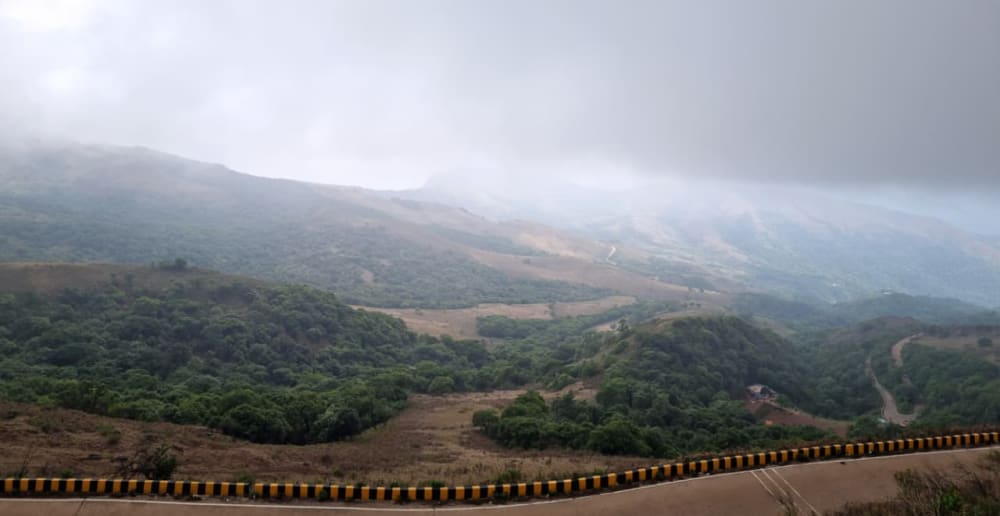
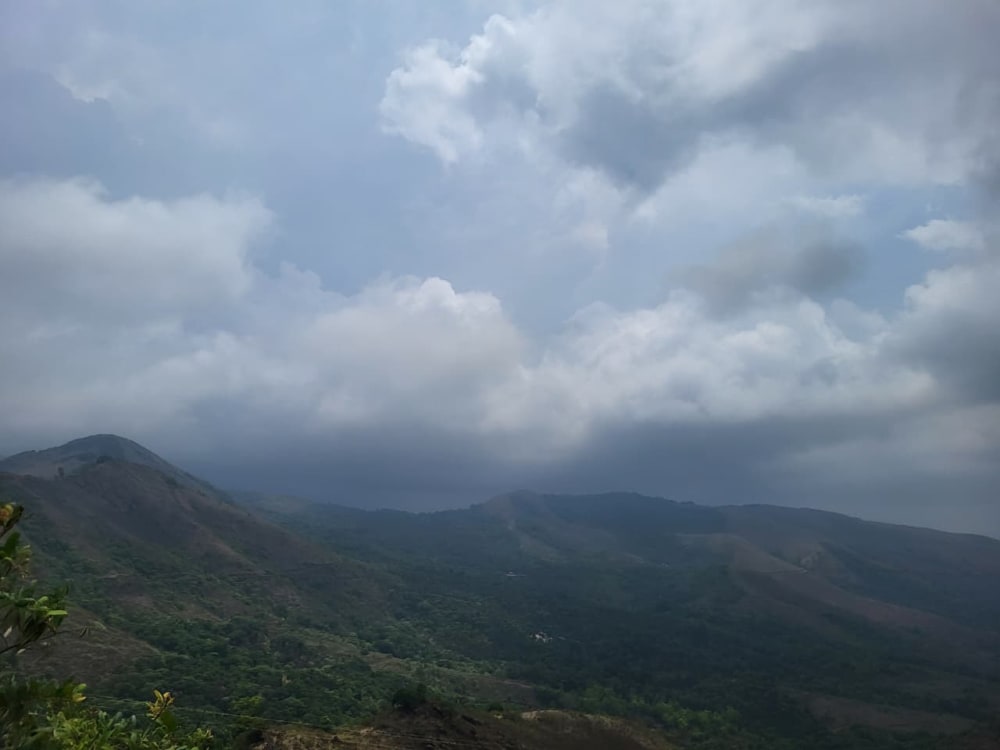
The climb was slow. The road wound upwards, peeling back layers of the forest, each turn revealing another valley holding pools of morning mist. The higher we climbed, the more the world below seemed to quiet down.
Sometimes you stop simply because the landscape demands a pause. You stand by the edge, watching the forest canopy stretch out into the horizon, while the clouds drift past, changing the shapes of the valley floor in a matter of seconds.
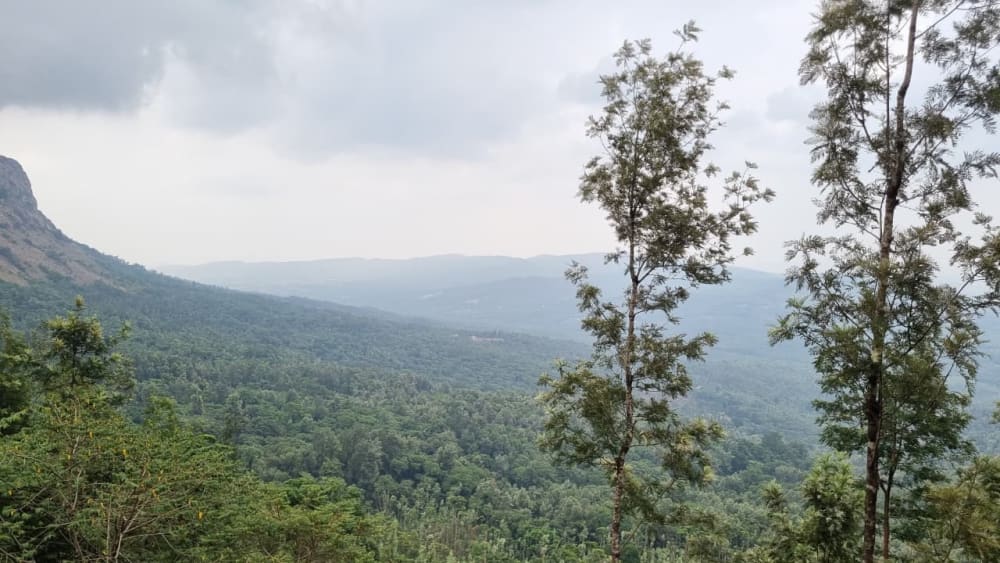

There is a strange comfort in looking at a horizon that seems to have no end. It is a visual zeroing out, a reminder of the scale of the world and the smallness of the things we spend our days worrying about.
Climbing Mullayanagiri
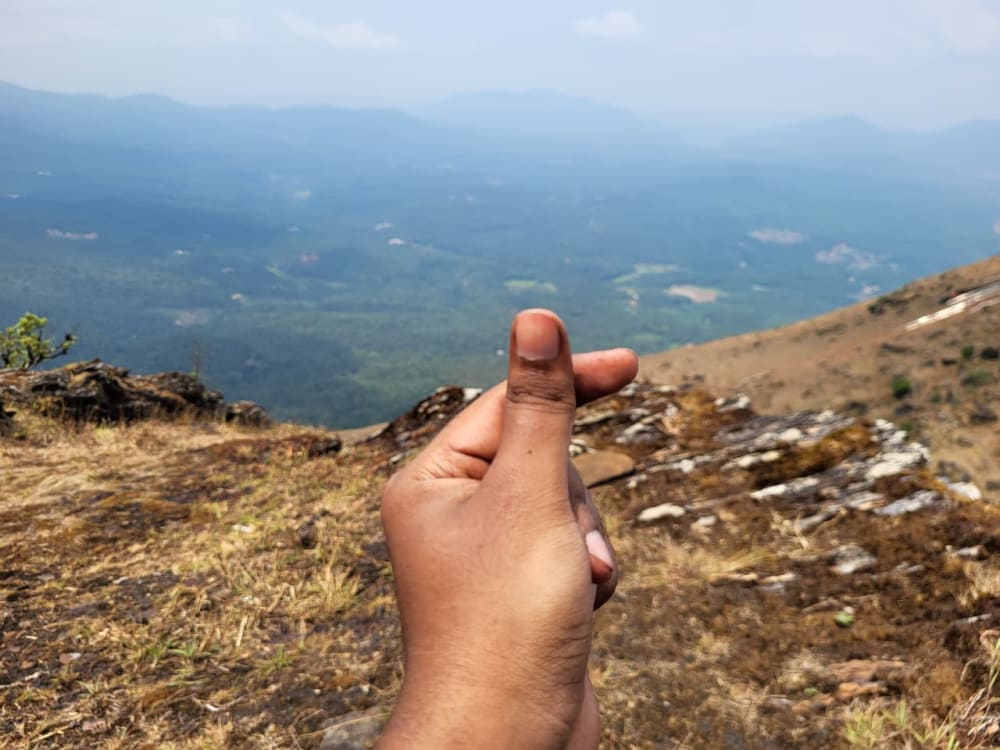
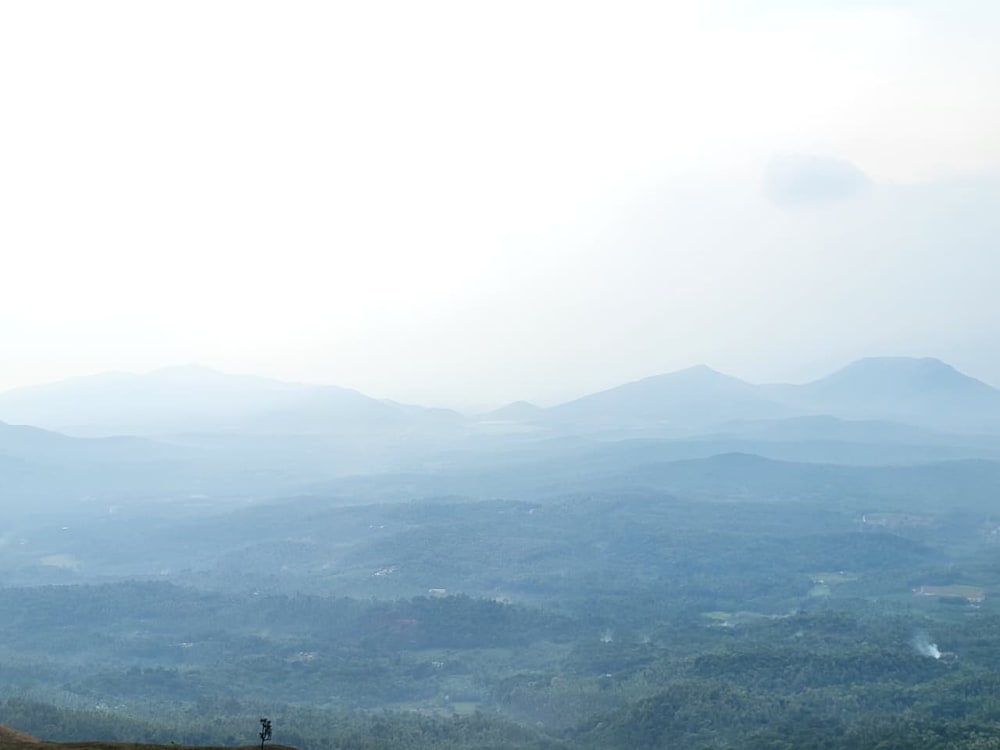
As the elevation grew, the slopes fell away more sharply. Looking down from the edge felt like looking at the curvature of the earth itself, wrapped in a blanket of green.

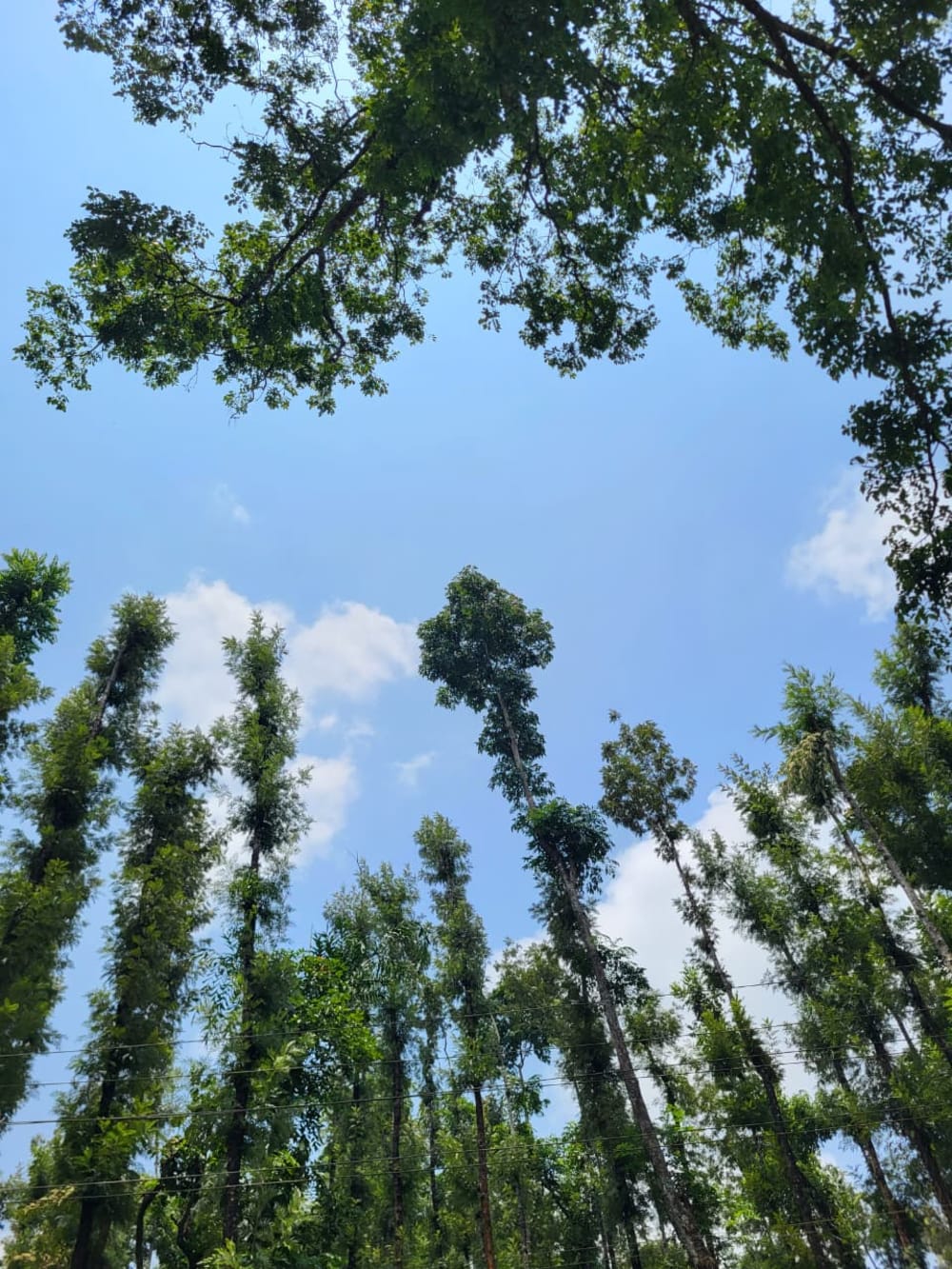
We left the main road to walk through forest trails. In the woods, the paths seemed to lose their sense of direction, wandering through thickets of bamboo and wild shrubs, disappearing into the fog. It felt like stepping out of linear time entirely.

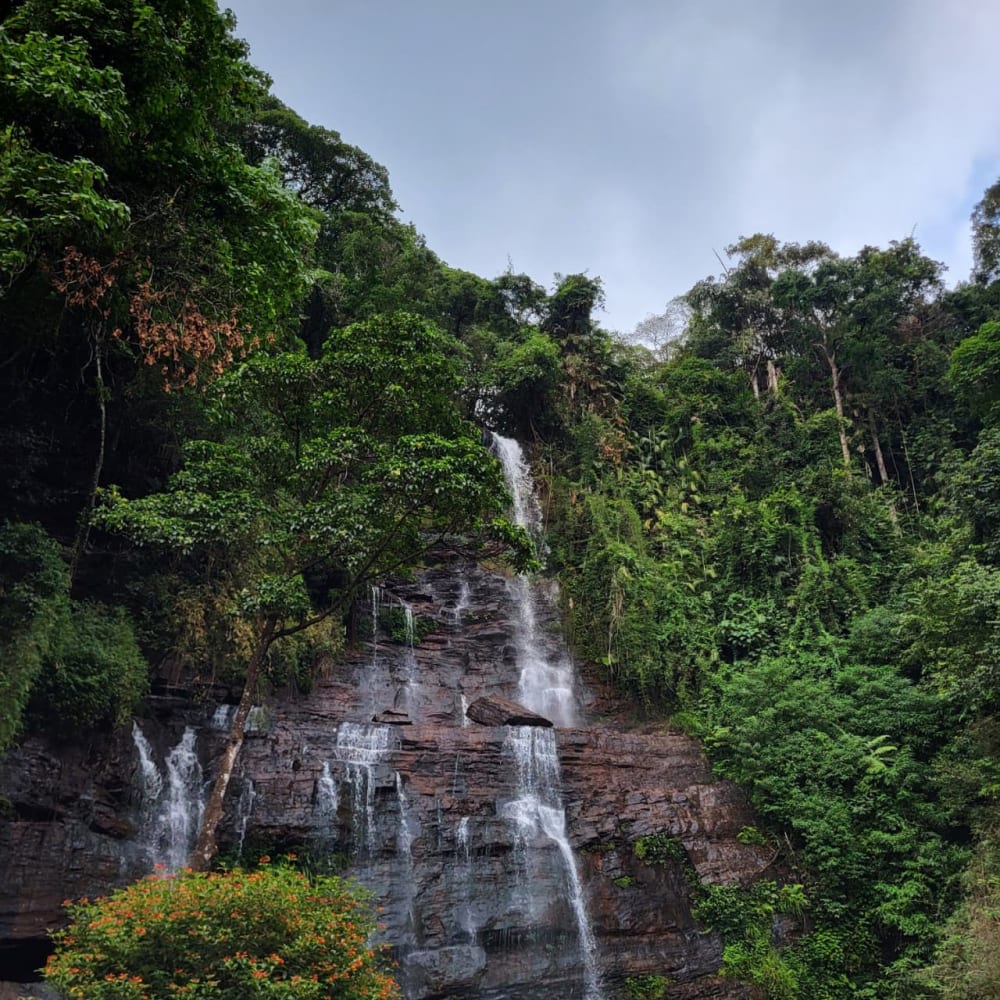
Deep in the foliage, the forest hid its own voice. A monsoon-fed stream cascaded over the rocks, a powerful, rushing sound that filled the valley long before the waterfall itself showed through the trees.
The climb continued, the air growing colder and the slopes turning softer, covered in thick grass that practically glowed under the overcast sky.
We stopped the bike at a random curve. There was no landmark, no viewpoint sign, no crowds. Just us, the metal of the motorcycle, and a vast valley slowly disappearing into a white wall of mist. These are the moments that never make it onto itineraries, but they are the ones that settle most deeply in the memory.
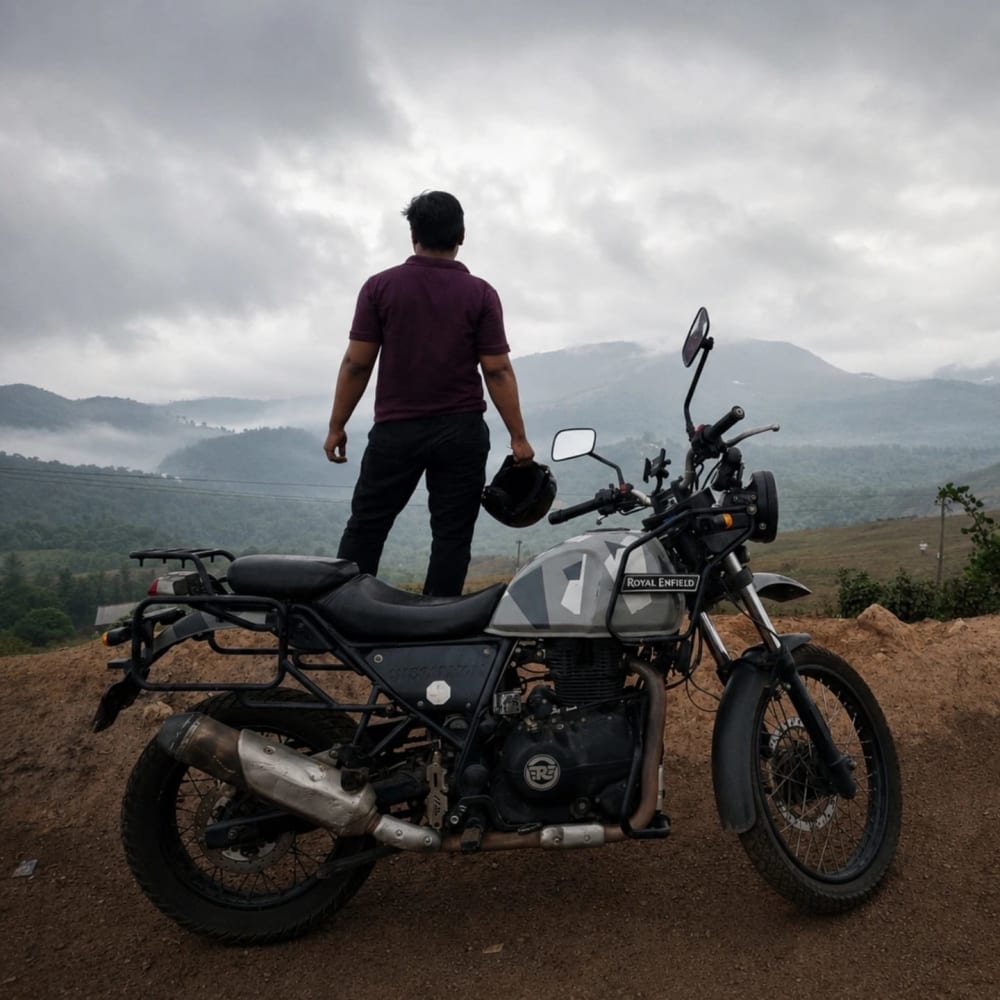
We finally stood at the summit of Mullayanagiri. Standing at the highest point of a landscape is less about the view and more about the wind, which rushes over the ridge with a raw, physical force that makes it difficult to hear anything else.
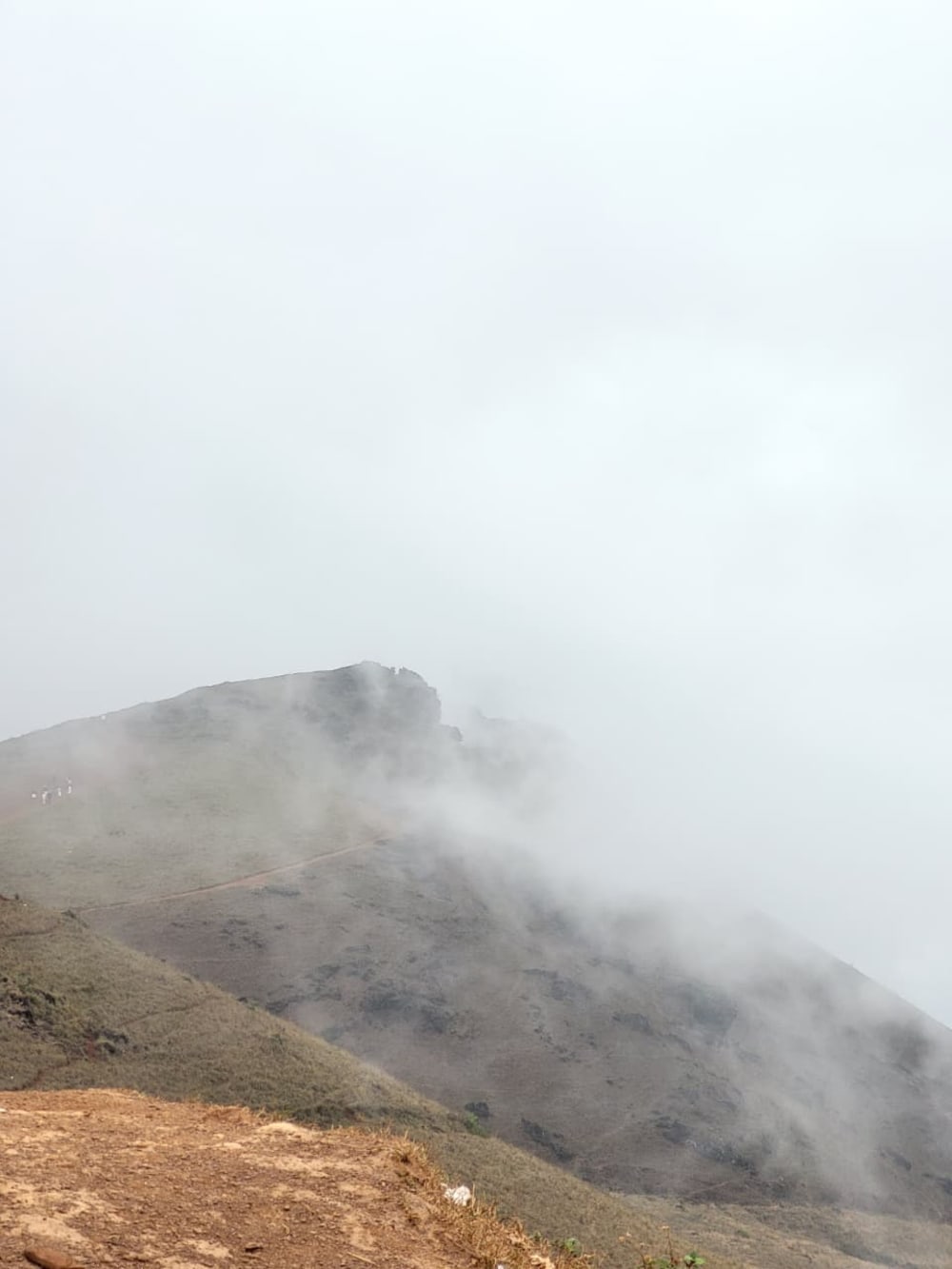
The clouds moved so fast they felt like tangible things, wrapping the peak in white and then clearing to reveal the valleys below, over and over in a continuous loop.

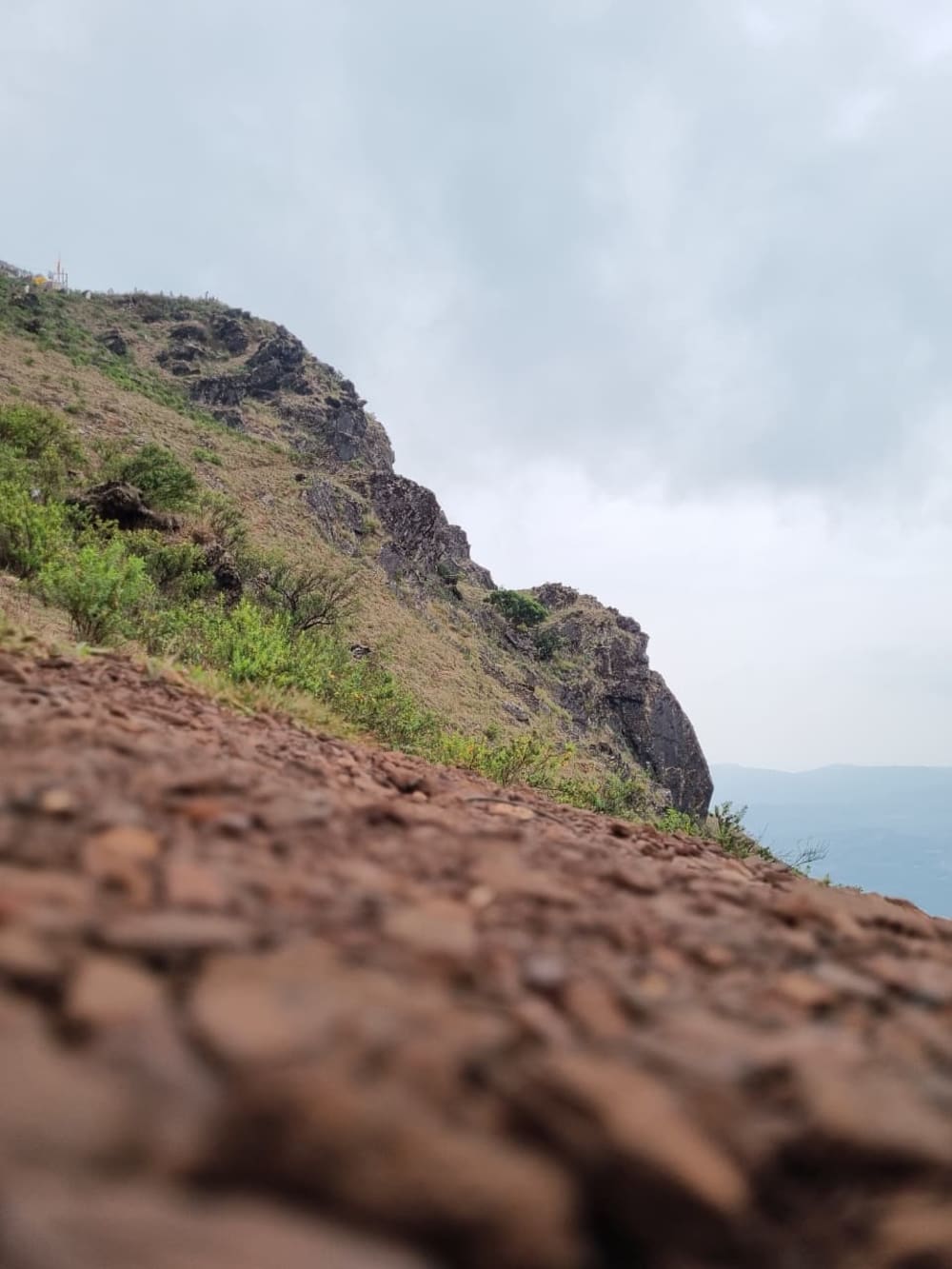
The speed of the wind at the peak was dizzying, transforming the ridge into a highway for the clouds:
Rain and Rock Faces on the Trail
From the summit, we moved toward Z Point. By the time we hit the trail, the sky had opened up. The rain was steady and cold. The dry trails turned into red clay, making every step a slow negotiation with gravity. Our jackets were soaked through, and our boots grew heavy with mud.
Yet, there is a strange liberation in getting completely wet. Once you accept that you cannot stay dry, the worry disappears, and you simply walk.


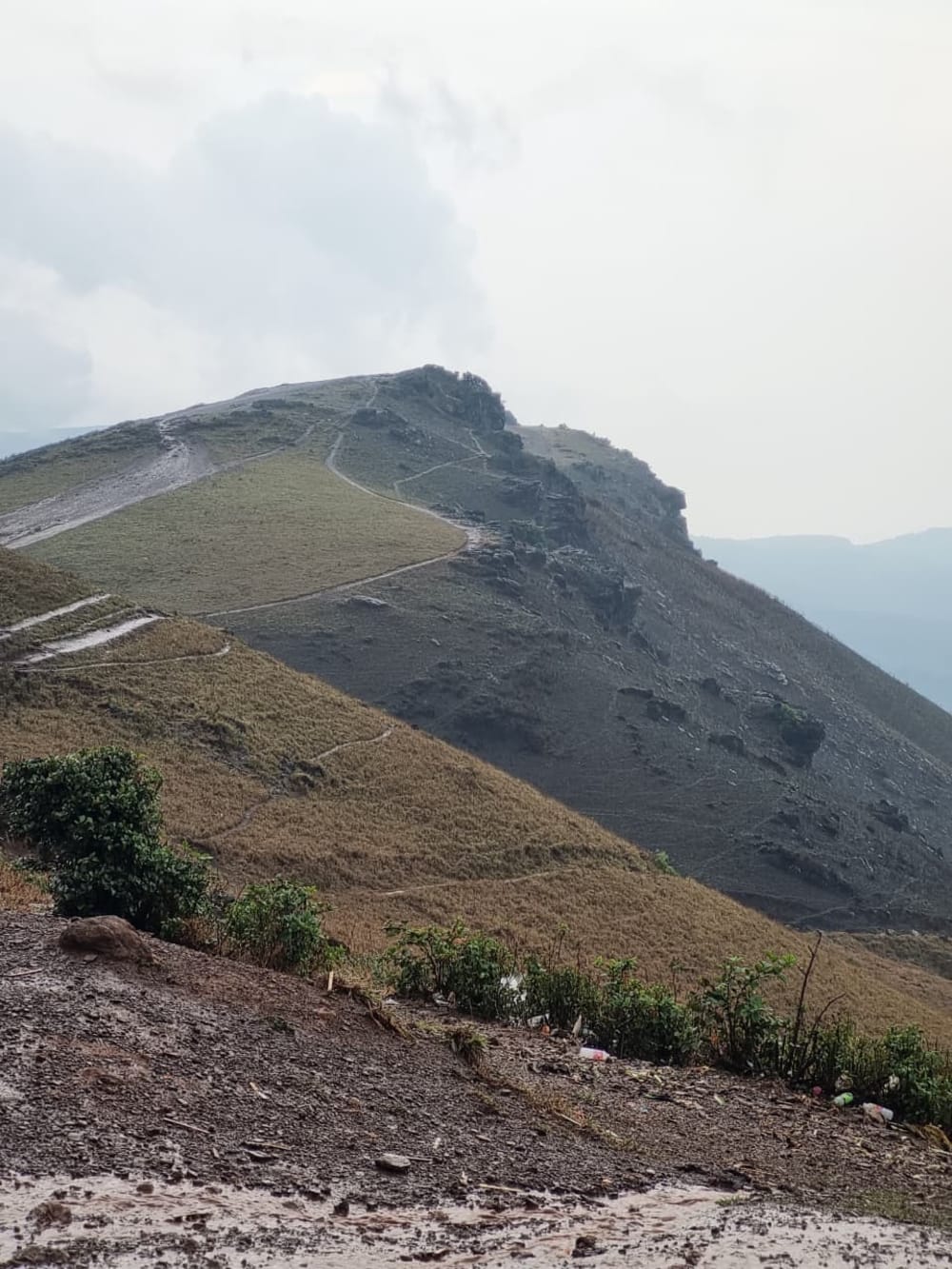
We trekked along the narrow ridge, completely enveloped by the storm, the rain coming down in sheets:
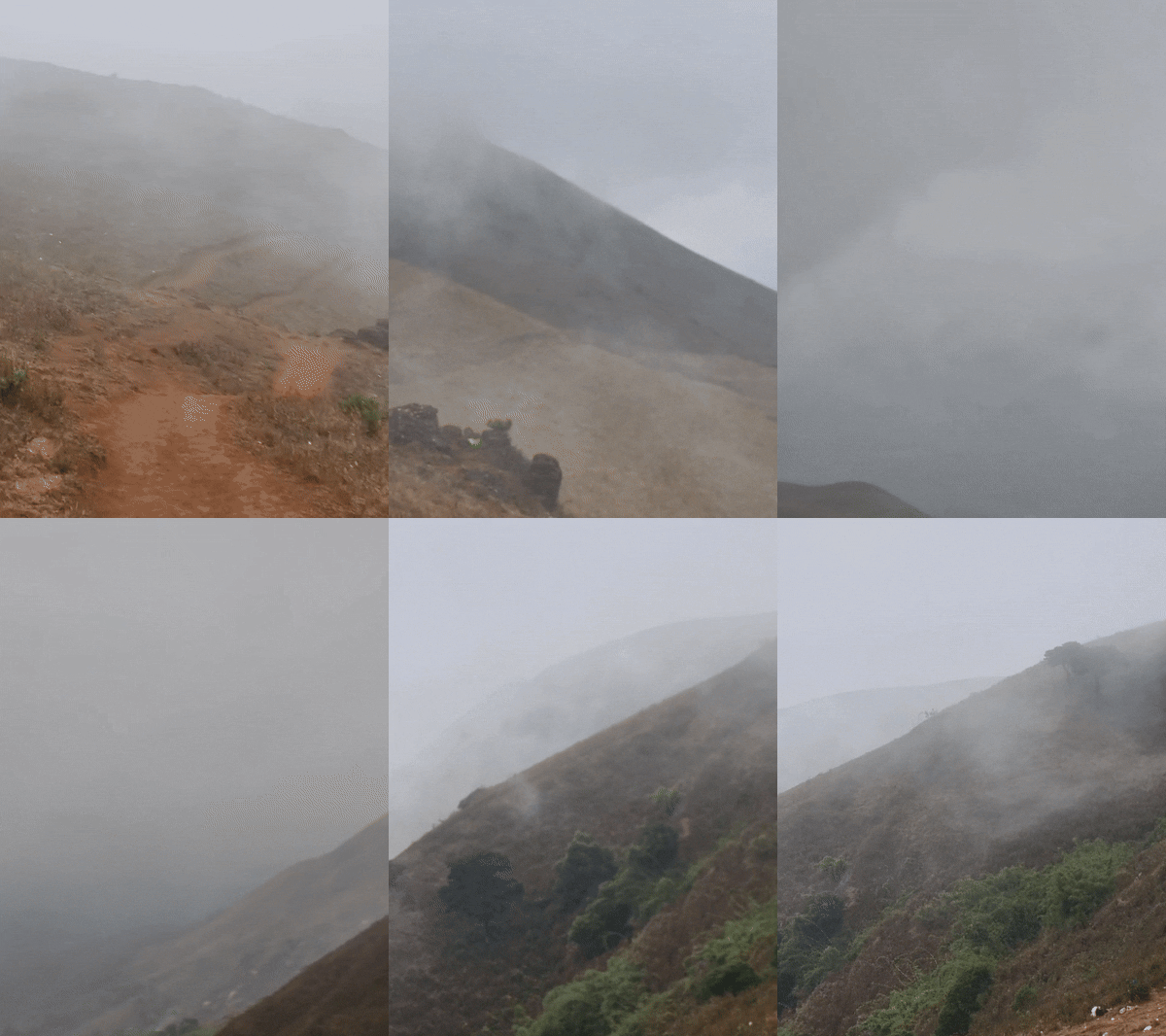
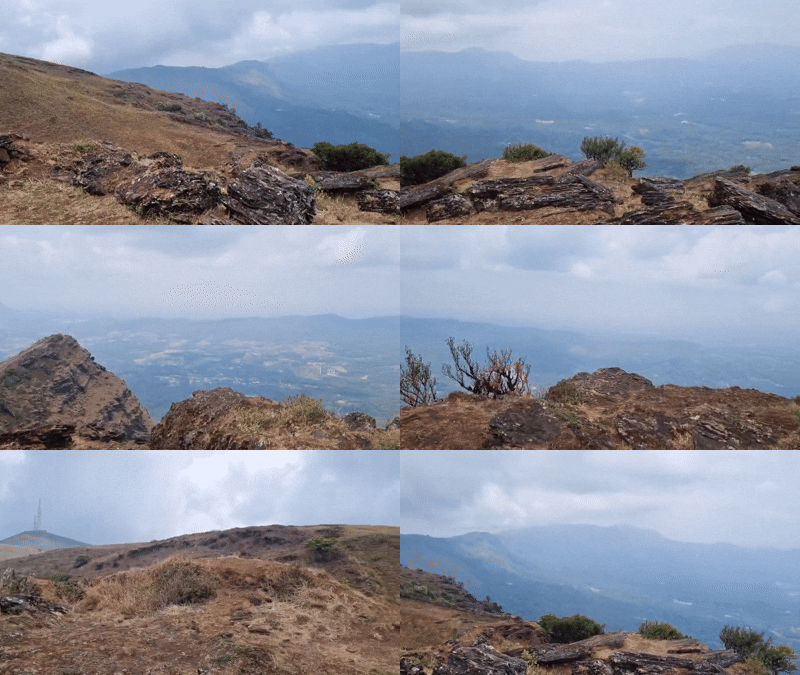
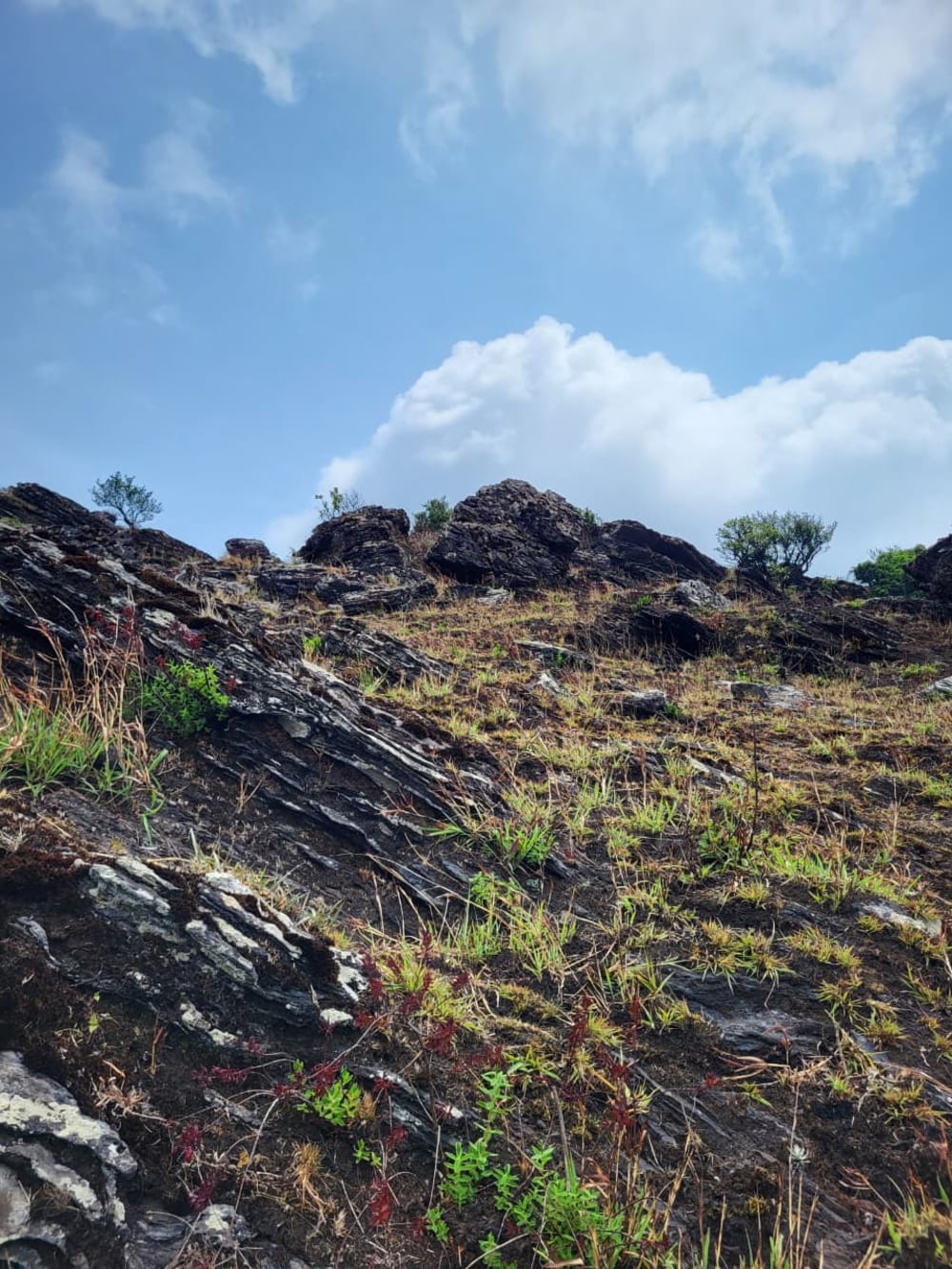
The landscape grew starker. Out of the fog, massive rock faces emerged like ancient monuments, their dark stone slick with rain and covered in clinging moss.

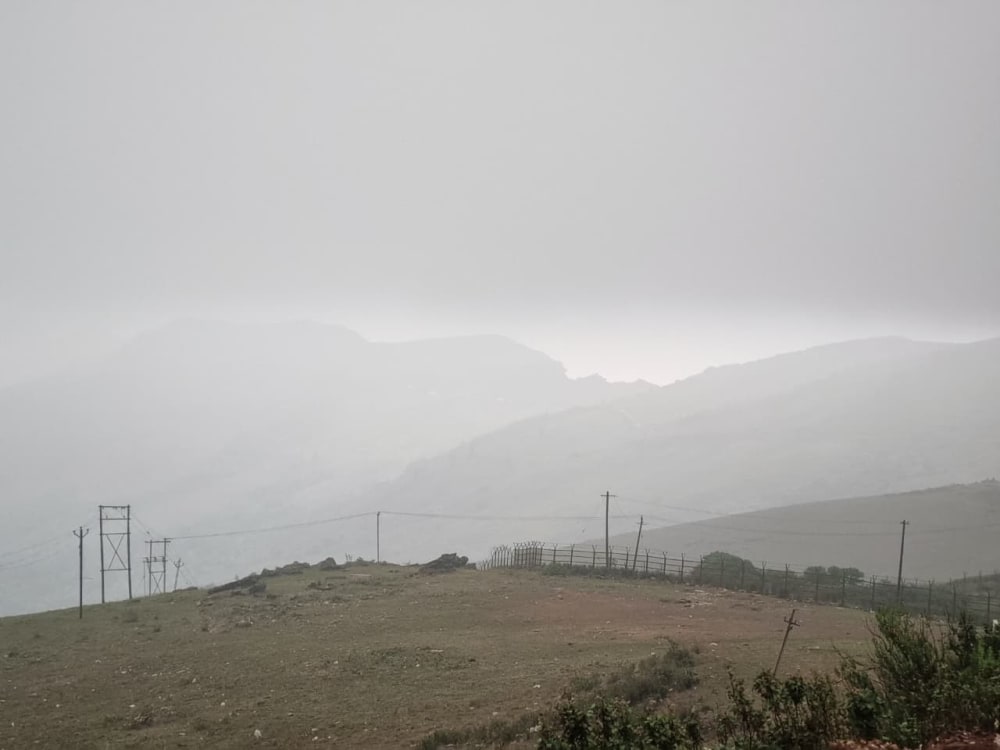
The wind whipped the fog across the ridges, temporarily swallowing the power lines and the trail ahead, creating a world that felt entirely empty of human presence.
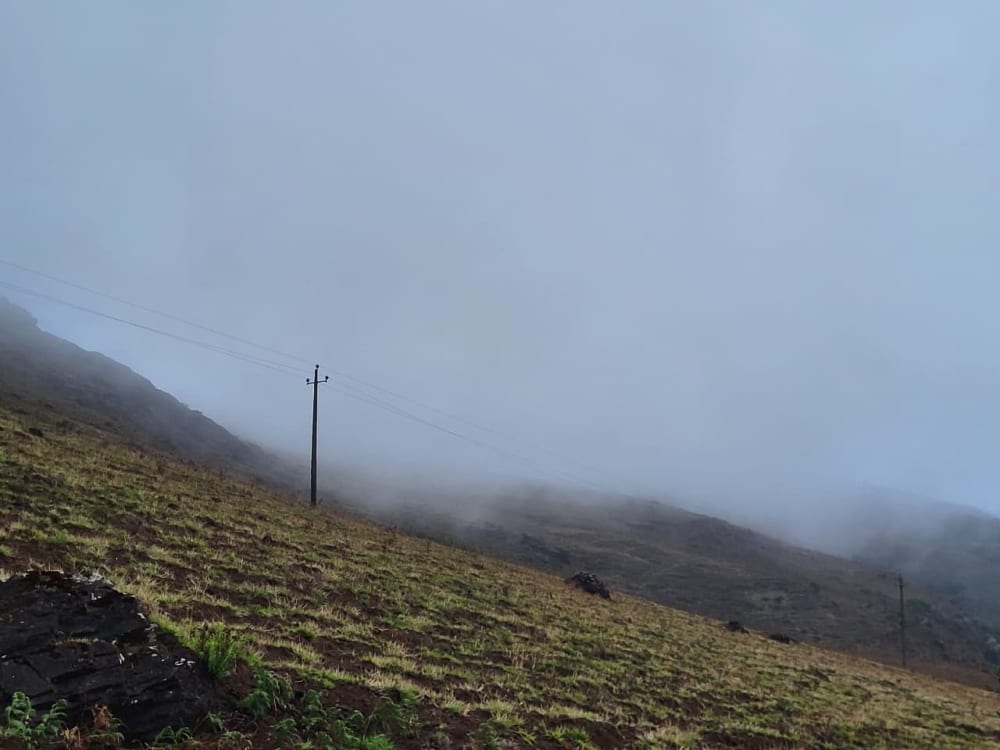
And then, during a brief lull in the storm, the mist parted just enough to show the valley floor far below. We stood on the wet rock, listening to the silence that follows a heavy downpour.
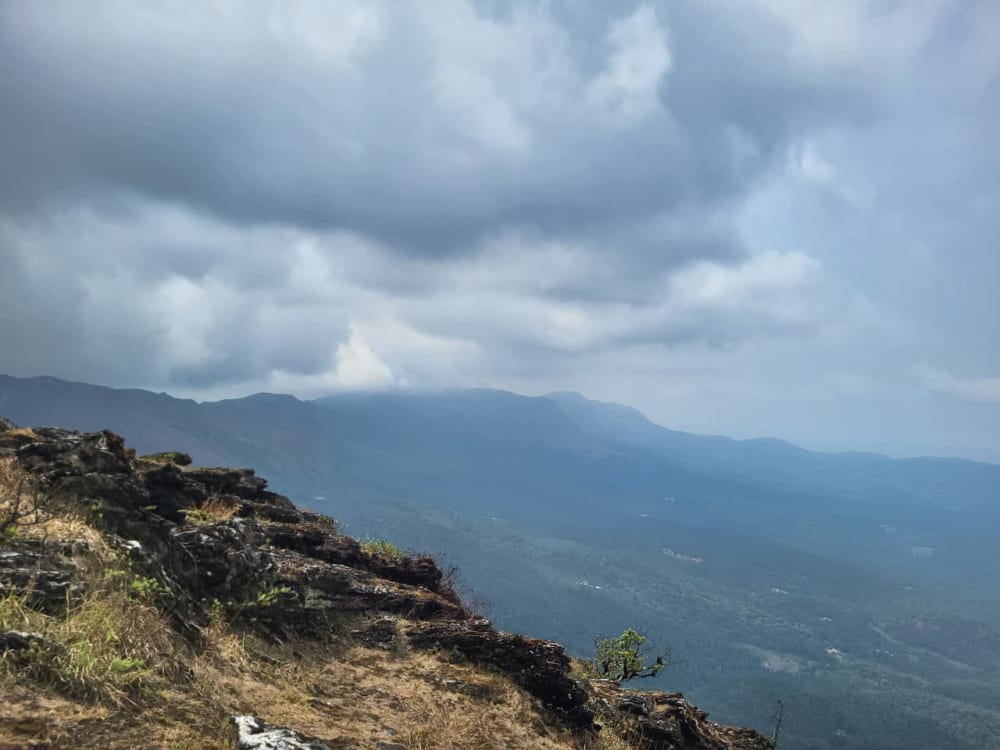
An Unplanned Ascent
On our way to Baba Budangiri, we spotted a peak rising sharply beside the trail. It wasn't on our map, and it didn't have a name we knew. It simply stood there, quiet and climbable.
So we climbed it.
We had no guide, no trail markers, and no real destination. We were guided only by curiosity. The ascent was steep and slippery, but when we reached the top, we found a quiet that felt entirely ours. We sat on the grass for a long time. No one reached for a phone. No one felt the need to speak.
Sometimes, the most meaningful conversations are the ones that happen in the space between words.
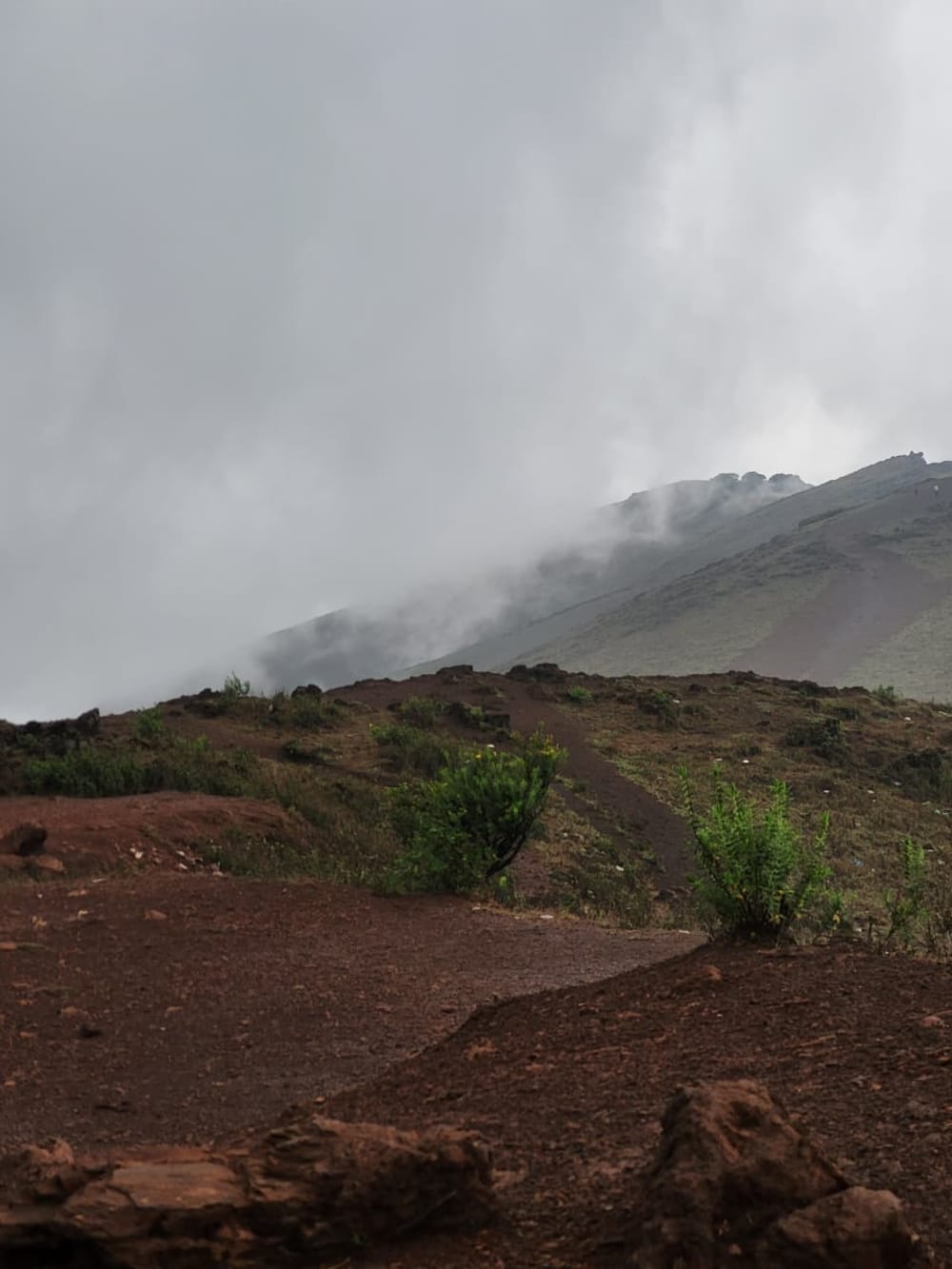
As evening approached, the light began to fade. The valleys filled with dark, blue shadows, and the ridges turned soft against the twilight sky.

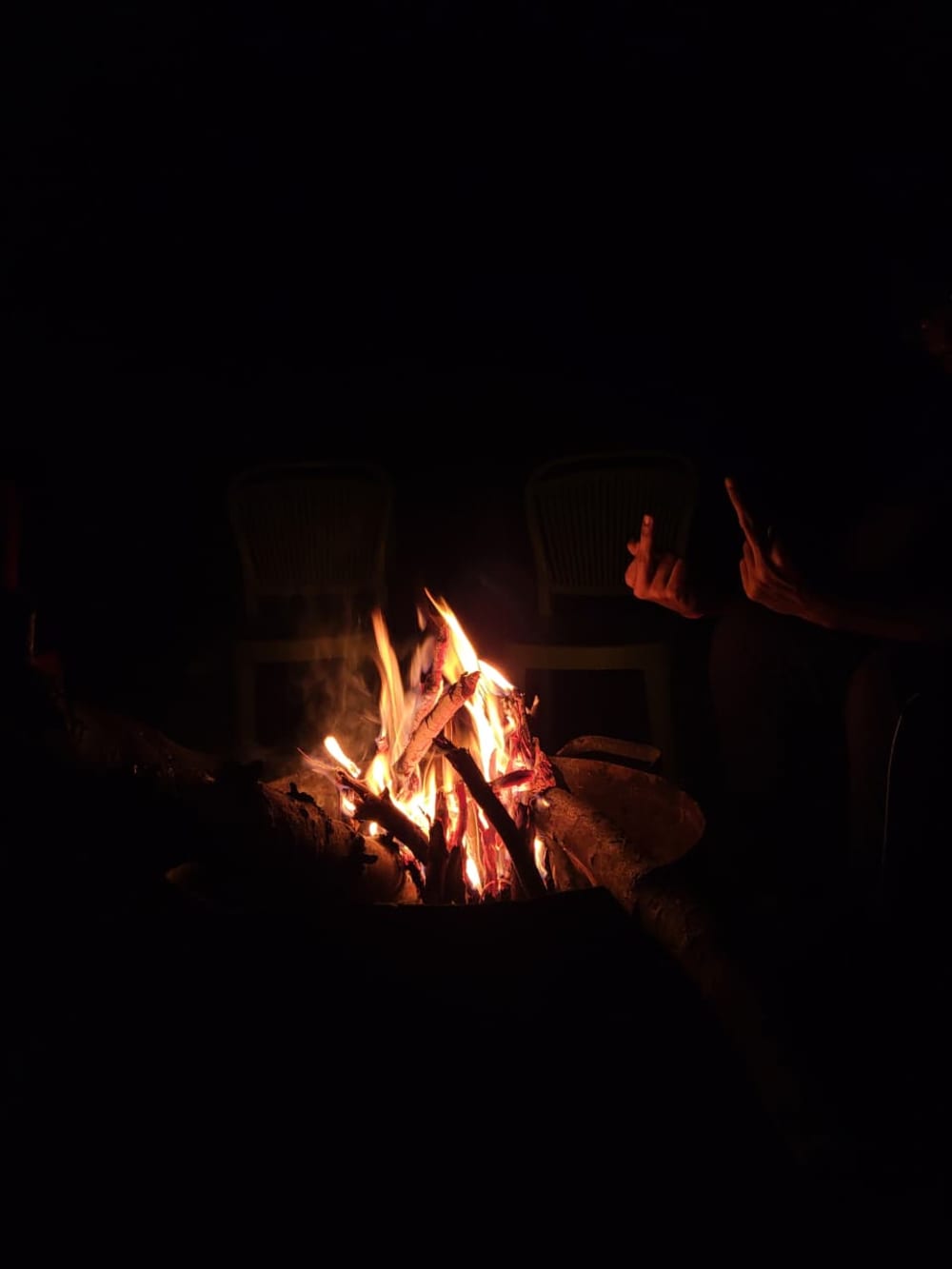
We ended the day sitting around a simple wood fire. The warmth felt like something we had earned after hours in the cold rain. We watched the embers glow, drying our wet jackets, sharing stories that felt warmer and truer in the quiet of the mountains.
Return to the City
Sunday morning arrived with an unusual clarity. The rain had stopped, and the rising sun slowly burned away the remaining fog, revealing the green ridges we had crossed in the dark the night before.
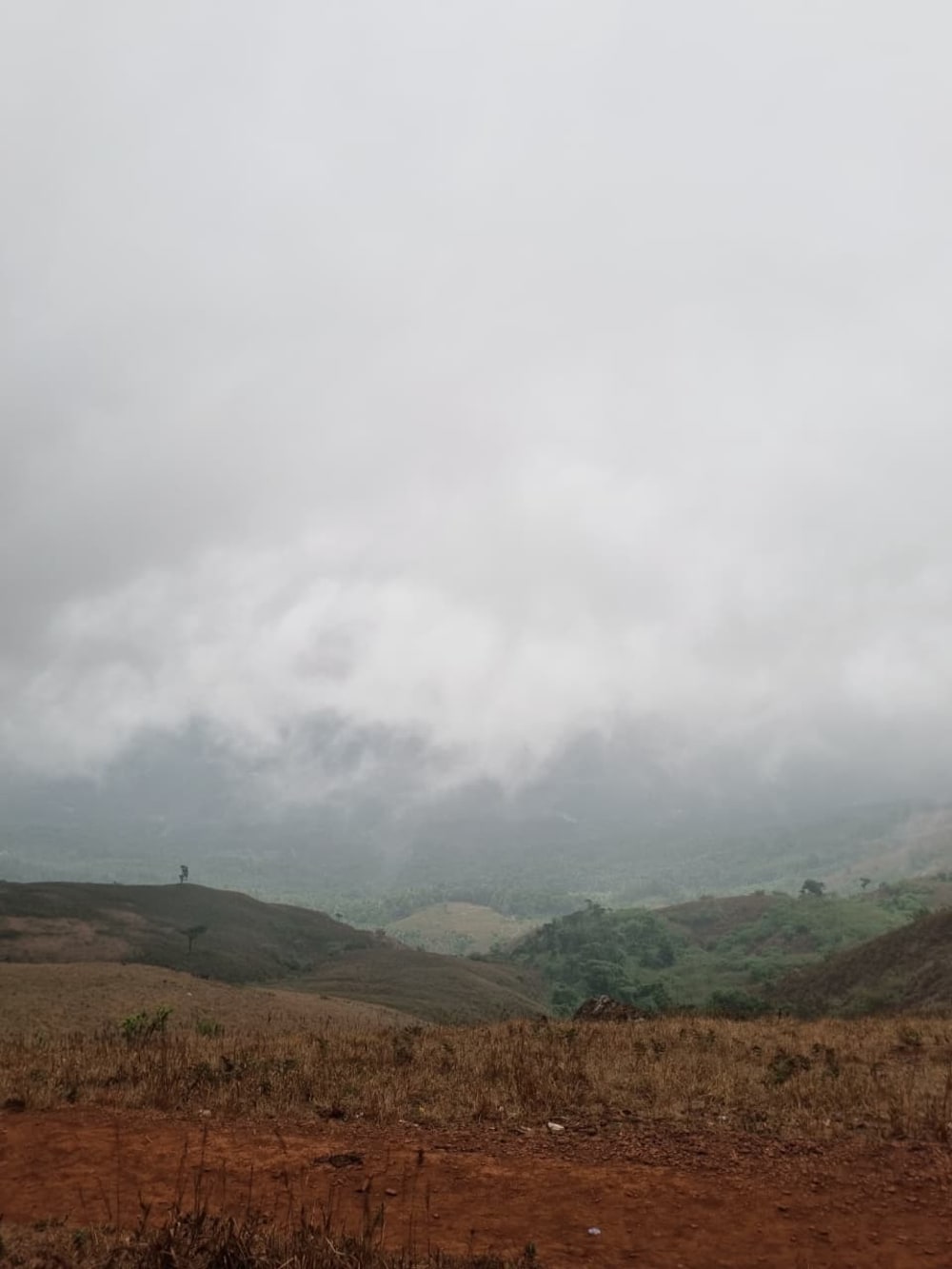
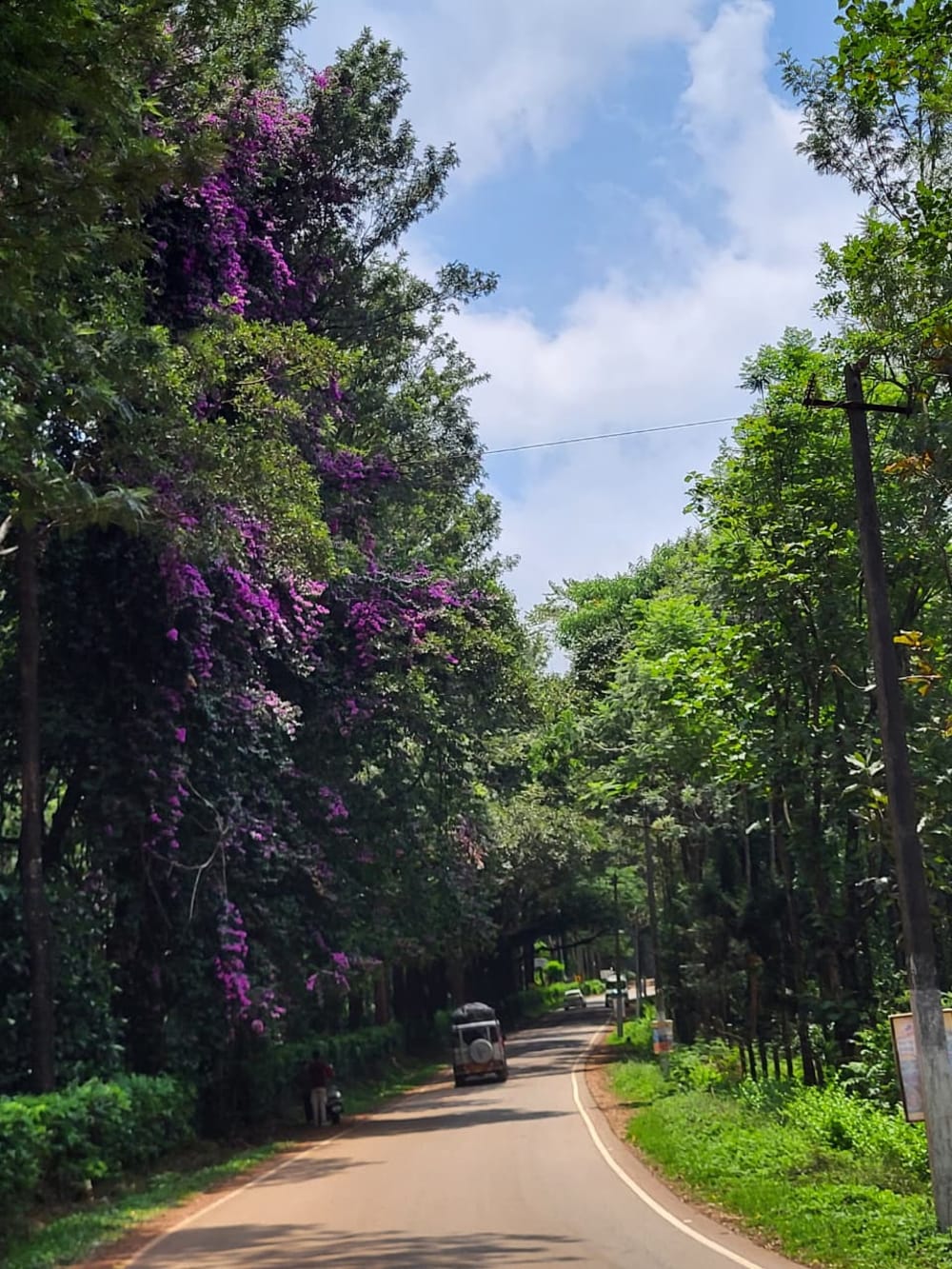
Our ride back took us through quiet mountain villages and rolling farms. Patches of purple bougainvillea lined the roadside, bright spots of color against the deep green fields. Slowly, the mountains began to shrink in our mirrors.
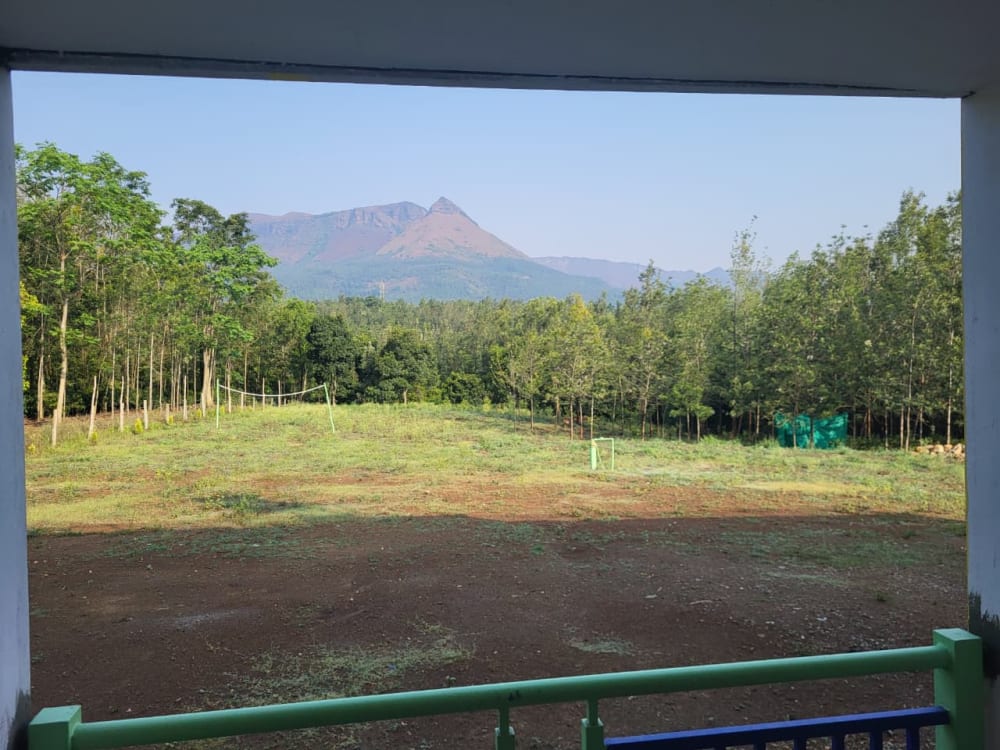
As we took one last look back, the clouds were still flowing lazily over the distant peaks:

By Sunday night, the bus was carrying us back to Bangalore.
Two days, a rented motorcycle, a campfire, and a quiet, unnamed mountain.
We don't go to the hills to escape our lives. We go to remind ourselves of what life feels like when we strip away the noise. The mountains don't rush, the rain doesn't follow a calendar, and the trails don't care about our productivity.
For a weekend, we lived by their rules. And because of that, the journey back felt a little lighter.