Surfing at Mulki

Surfing on Instagram looks incredibly cool, all sun, sand, and effortlessly gliding over waves. But the actual reality of learning it is a brutal, exhausting, and humbling slap in the face.
Recently, I went down to Mulki, a quiet coastal town in Karnataka famous for its backwaters and consistent surf breaks, to learn how to surf at Aquatic Indica Surf School. It was three days of pure physical punishment, endless gulps of salt water, and some of the most exhausting hours I've spent in years. Within the very first hour on day one, half the people in my batch had already given up. They were sitting on the beach, staring at the water, completely defeated and ready to pack their bags. Honestly? I felt the exact same urge. My arms were screaming, my chest was burning, and every muscle was telling me to just lie down. But I forced myself to rise up, drag the heavy board back into the water, and try again. I'm glad I did.
Day 1: Entering the Camp
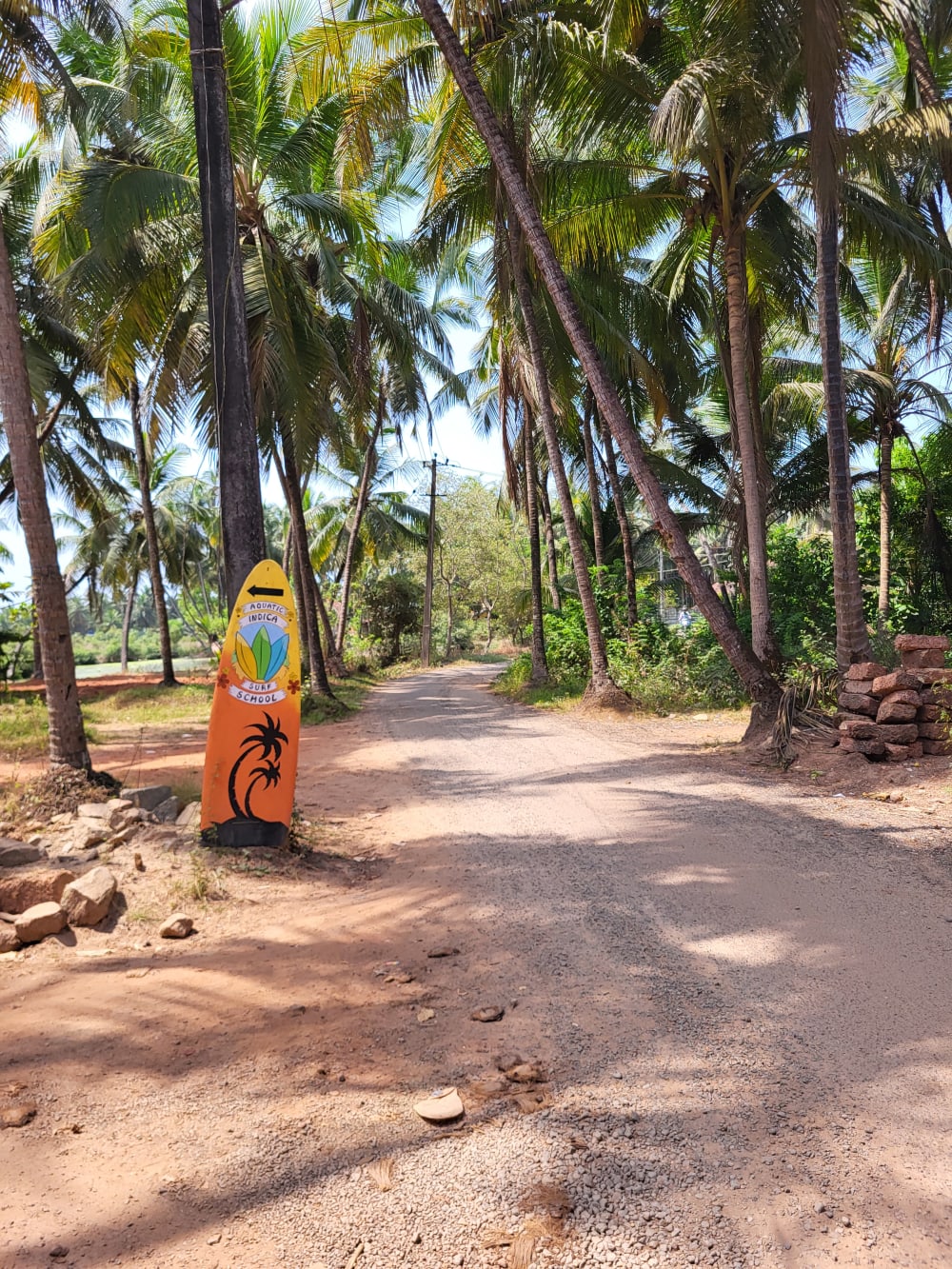
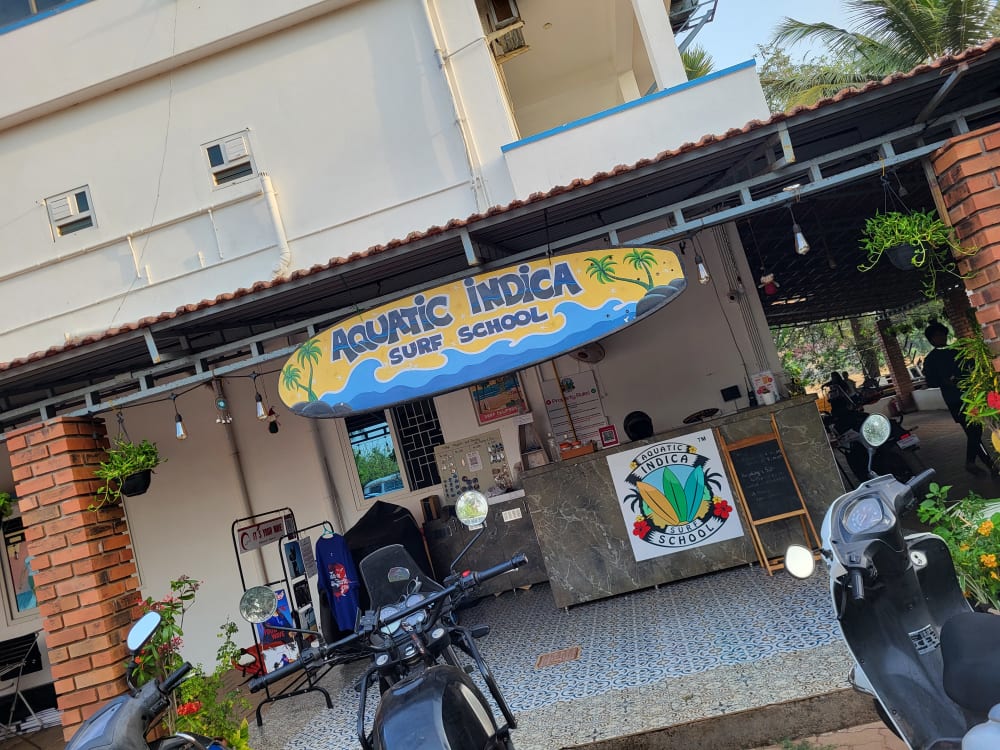
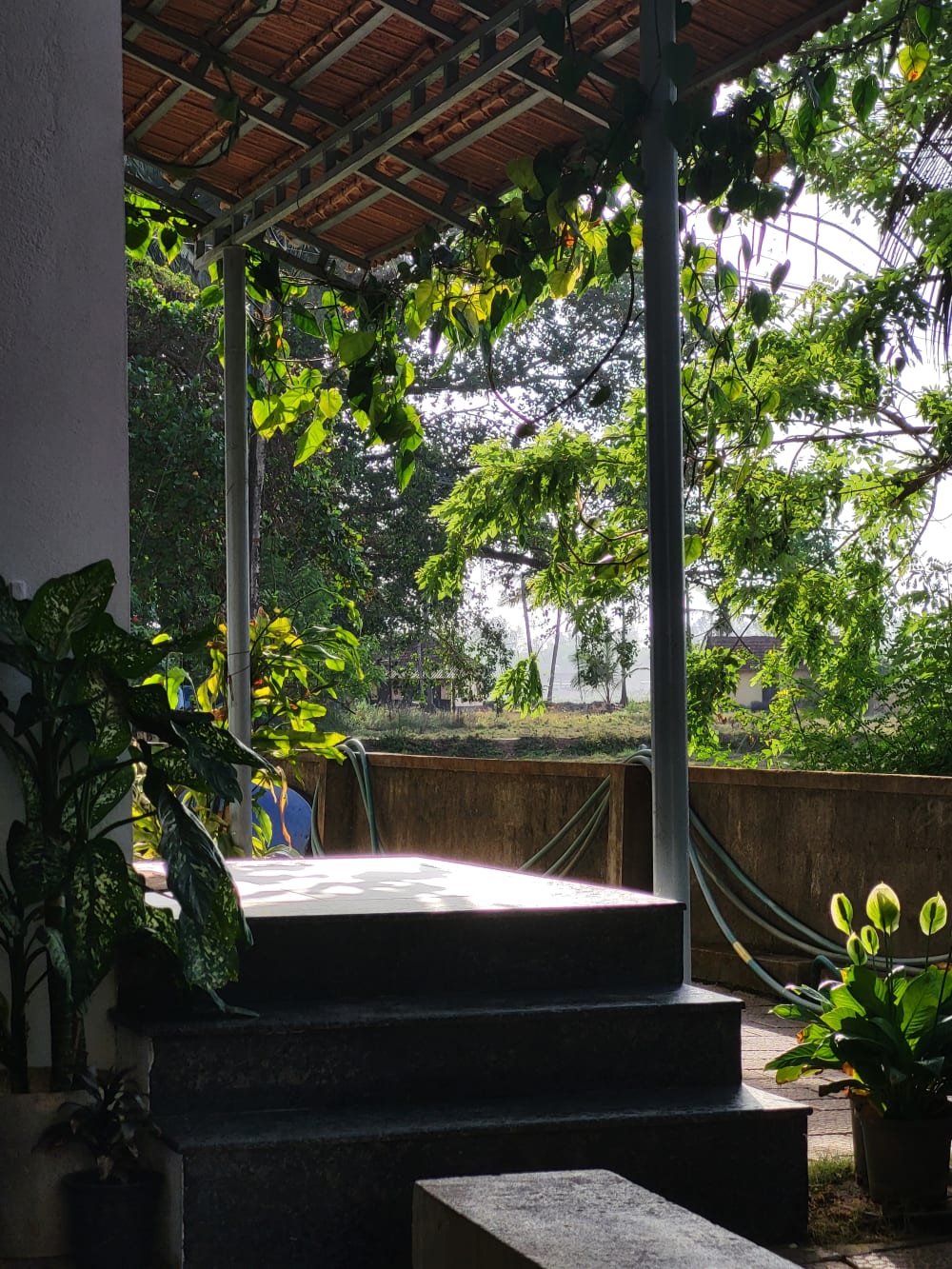
The ride to the camp instantly cuts out the noise of the highway. A sandy dirt road lined with palm trees leads you in, with a simple surfboard sign pointing towards Aquatic Indica. The place has a raw, functional vibe, with surfboards stacked on racks, life jackets drying under the trees, and a shaded porch where you can sit and mentally prepare for the beating your body is about to take.
Backwater Training: Finding Balance
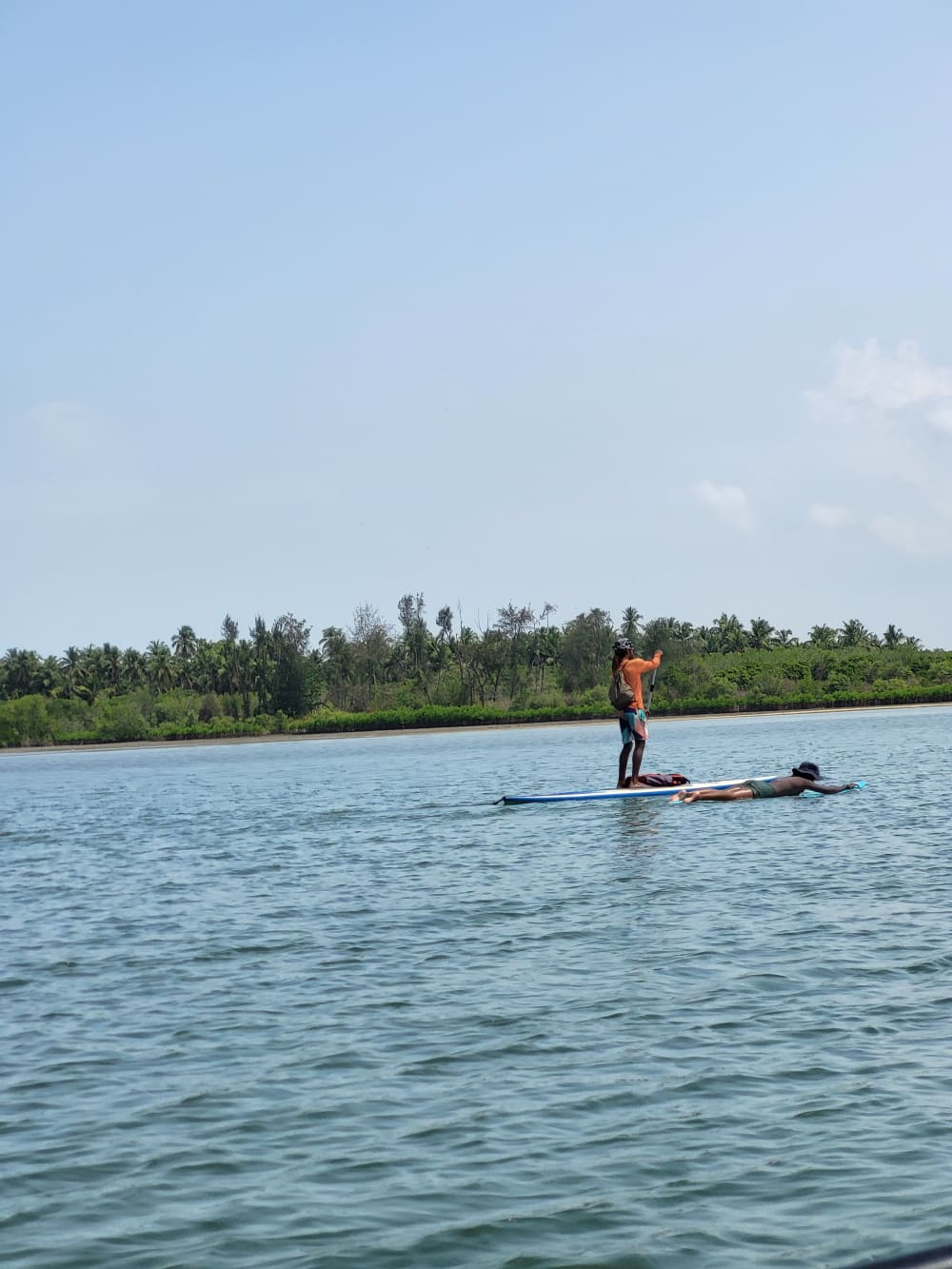
Before they let you anywhere near the ocean, you have to prove you can at least balance on a floating piece of foam. We spent our first training session on the calm backwaters. We spent hours on stand-up paddleboards, figuring out how tiny shifts in weight affect balance. Some were standing, others were paddling flat on their stomachs to build that baseline paddling endurance.
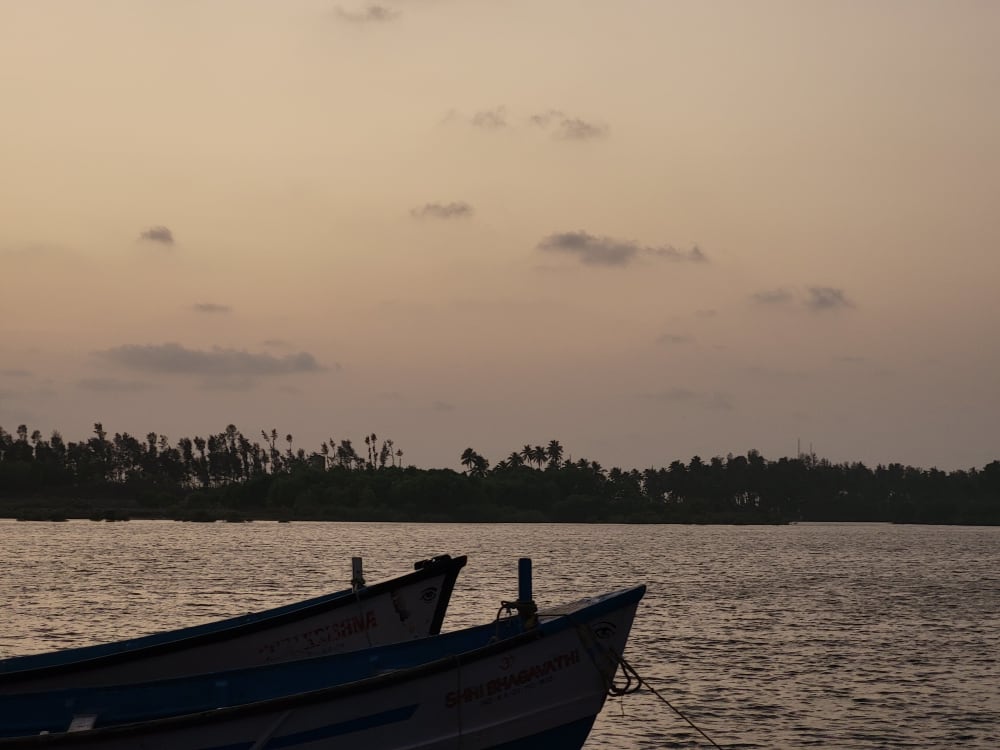
By evening, the water had turned completely still. Traditional boats sat moored against a hazy, quiet sunset. It was beautiful, but it felt like the calm before the storm.
Day 2: The Ocean and the Physics of Wiping Out
Day two was the real test. We headed out into the Arabian Sea early in the morning. Ocean surfing is a completely different world. The current pulls at you, the waves crash over your head, and paddling out through the break is a relentless struggle.
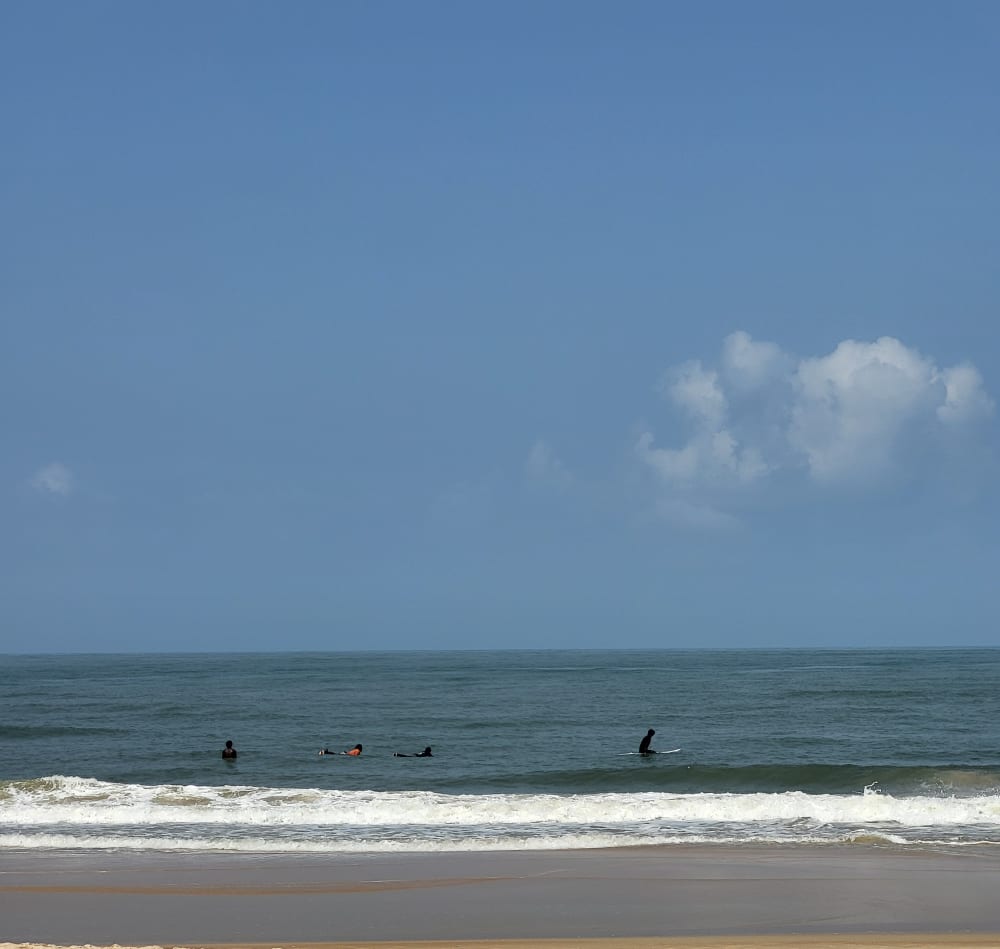
This is where I realized that the most important thing you can learn in surfing isn't how to stand up, it's actually how to fall. The "art of falling" is a real survival skill out there. I watched people in other groups take awful spills, resulting in dislocated shoulders, sprained ankles, and bodies covered in deep scratches from getting tumbled over the sand.
Luckily, I approached it like a physics problem. Once you understand the kinematics of water resistance, wave inertia, and how to tuck your chin, cover your head, and go limp to let the wave roll over you instead of fighting its energy, you stop getting hurt. Because I took the time to understand the physics of the wipeout, I managed to get through the sessions completely intact.
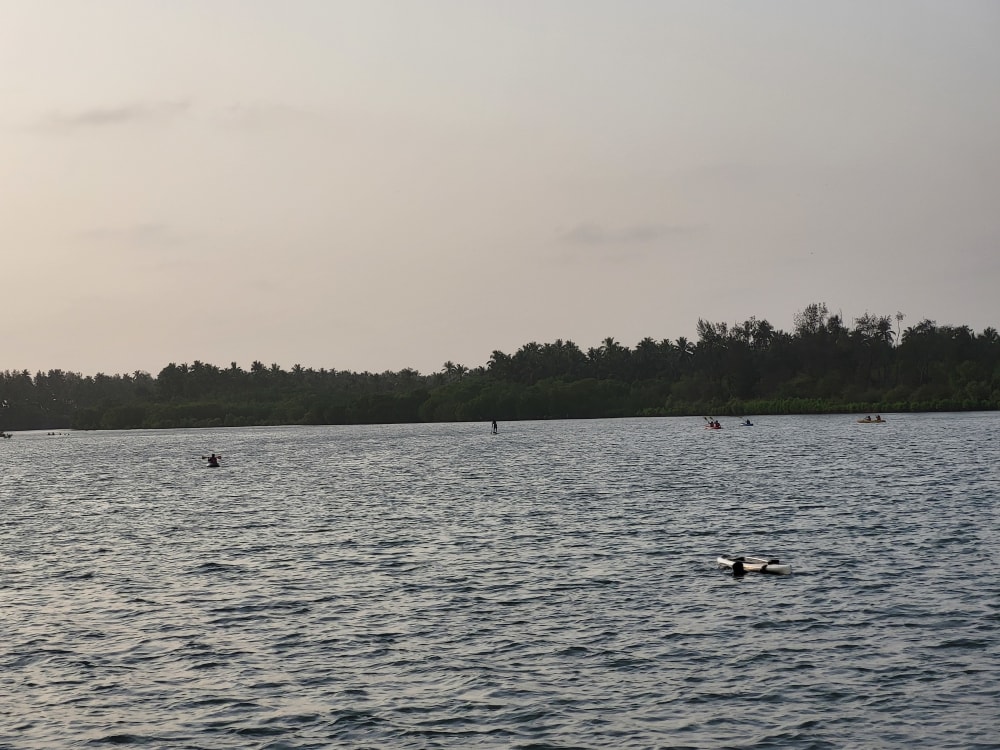
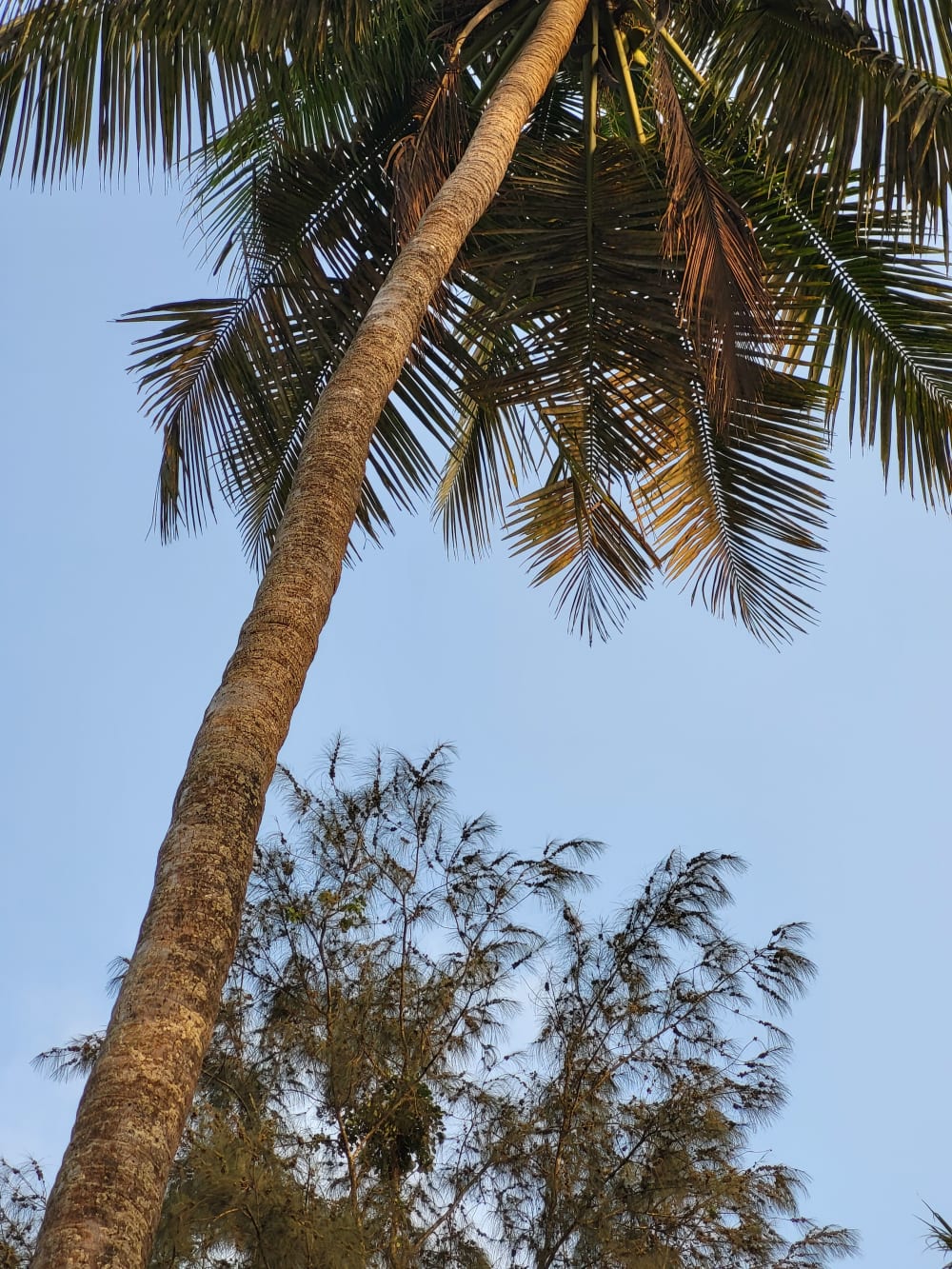
In the afternoon, we went back to the backwaters to cool down and paddle along the tree-lined shores, looking up at the palm trees against the bright blue sky.
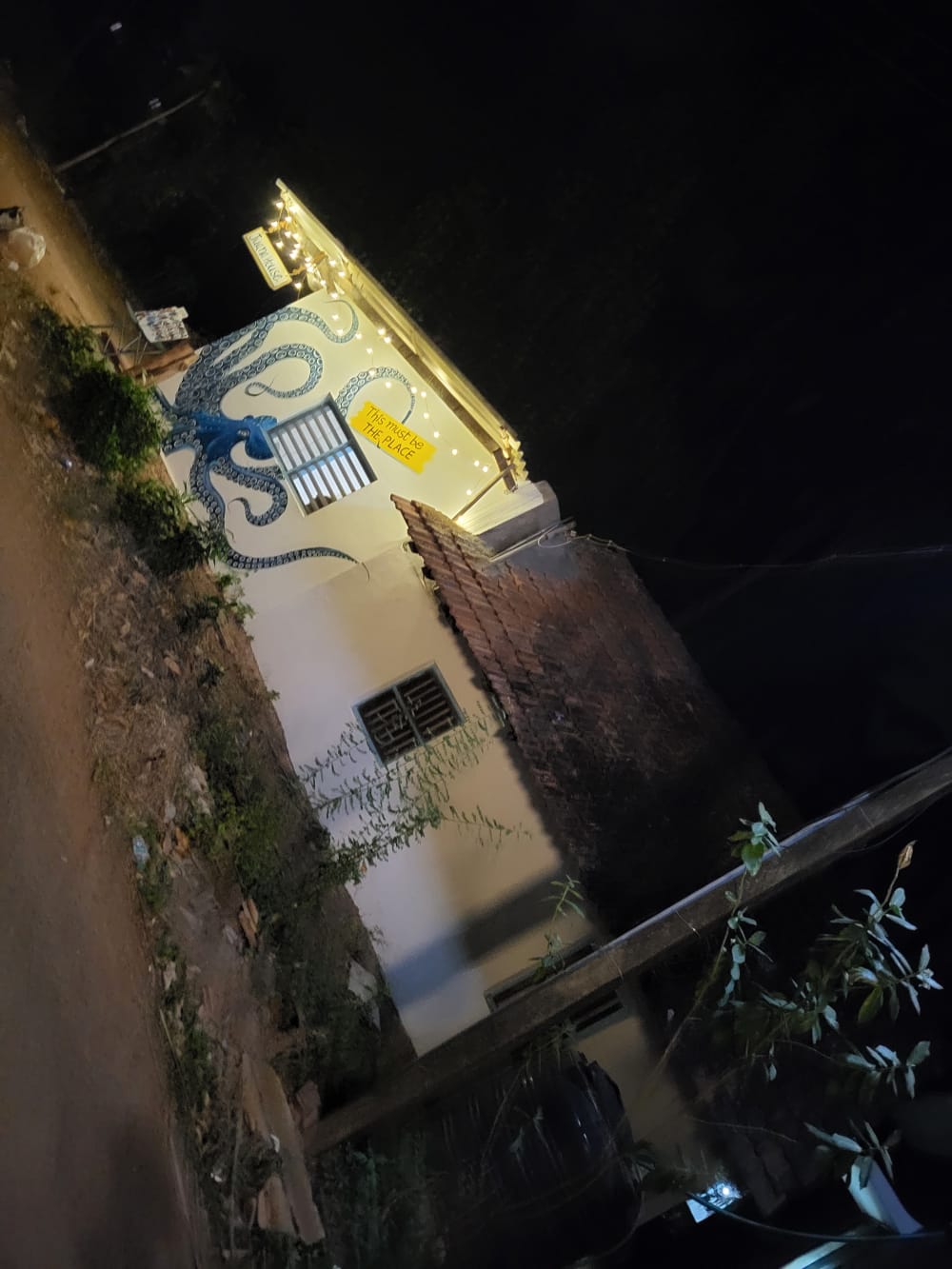
By night, the camp lit up under warm string lights. There’s a white building with a large blue octopus mural on the wall and a bright yellow neon sign that says, "This must be THE PLACE." Sitting there under the lights, recovering and talking with the others, it felt like the absolute truth.
Day 3: Chasing My Own Waves
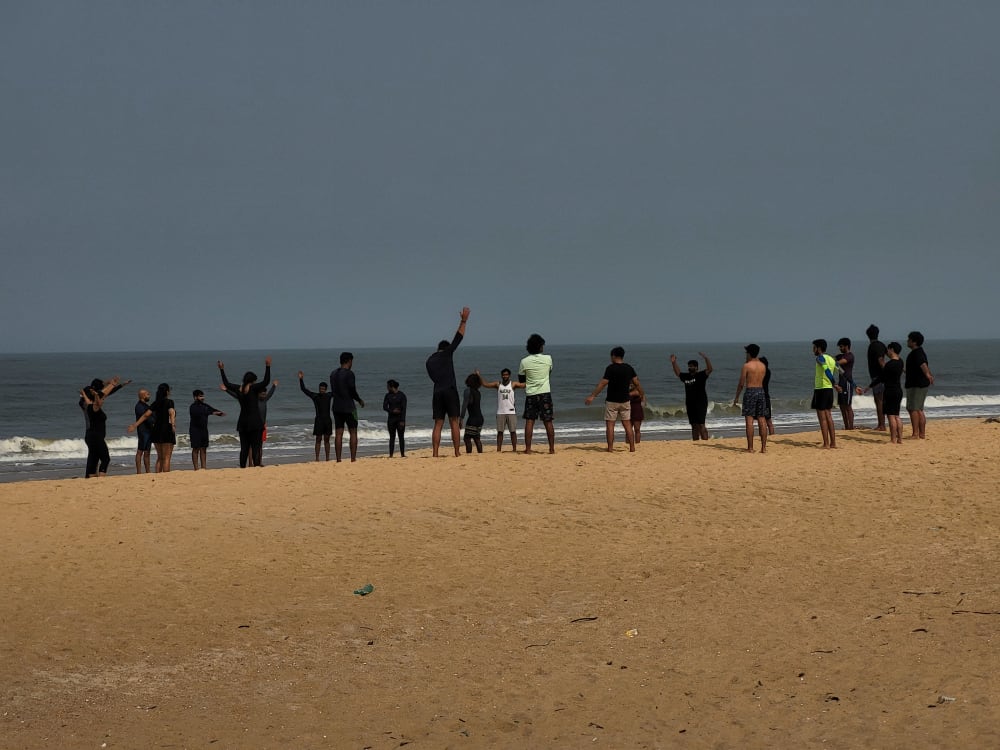
The final day started with beach warm-ups, standing in a large semi-circle facing the sea, stretching out shoulders and cores that were already incredibly sore.
But by the afternoon of the third day, something clicked. The panic was gone, replaced by a quiet confidence. I wasn't just sitting there waiting for an instructor to push me into a wave. I was scanning the horizon, reading the swells, paddling hard, and chasing my own waves. When I paddled, caught a wave entirely on my own, stood up, and glided forward, it was an unbelievable feeling.
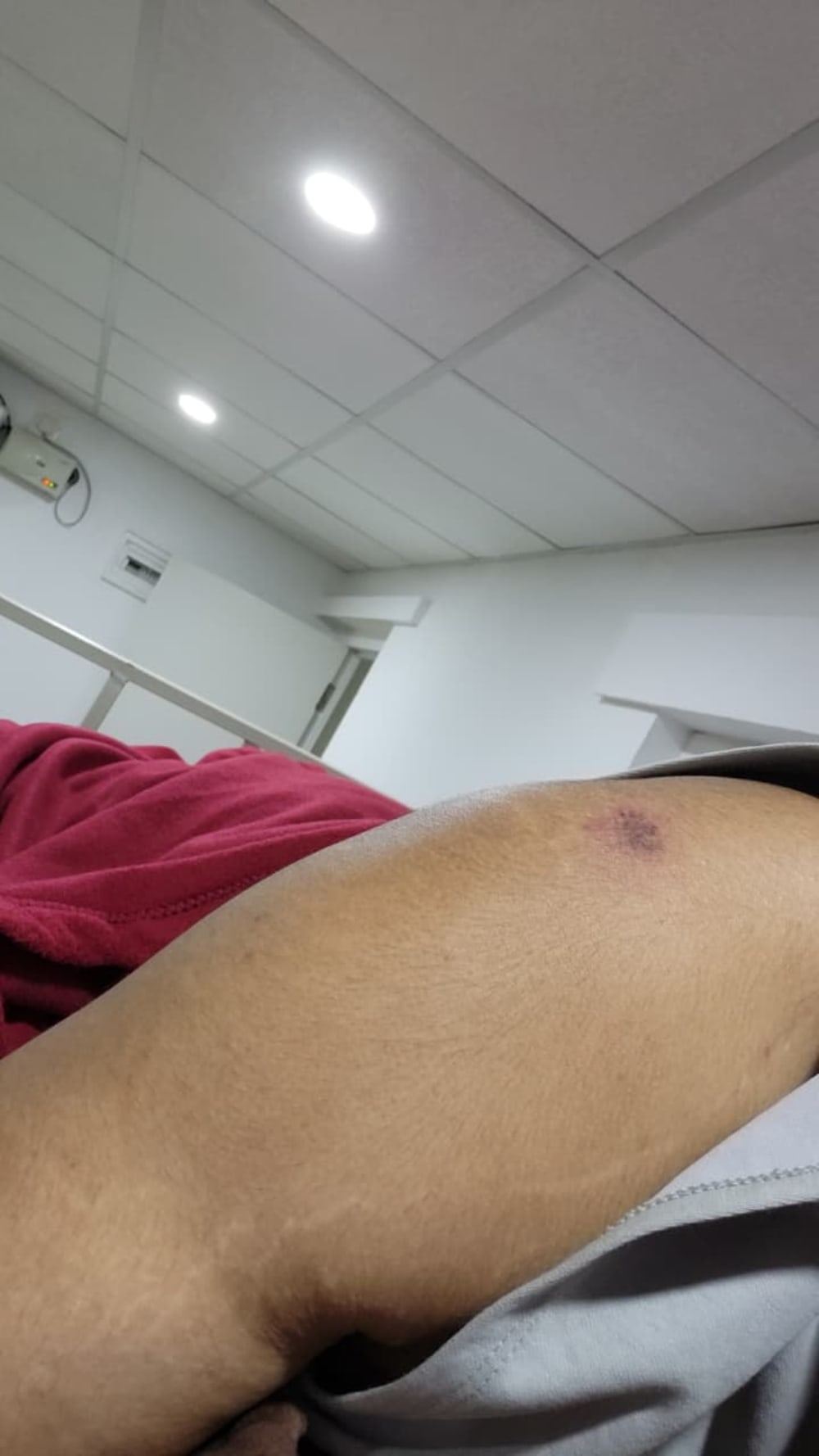
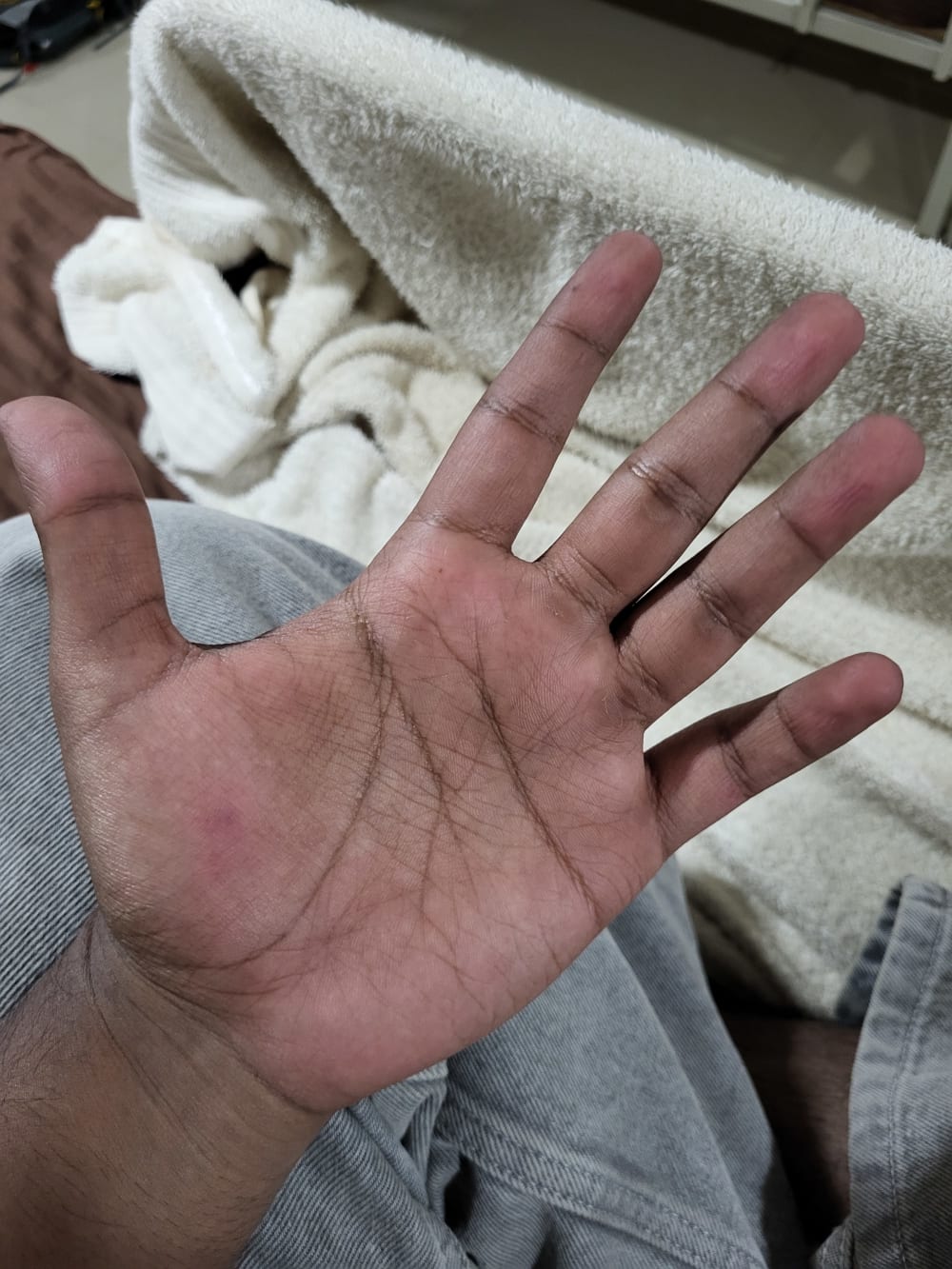
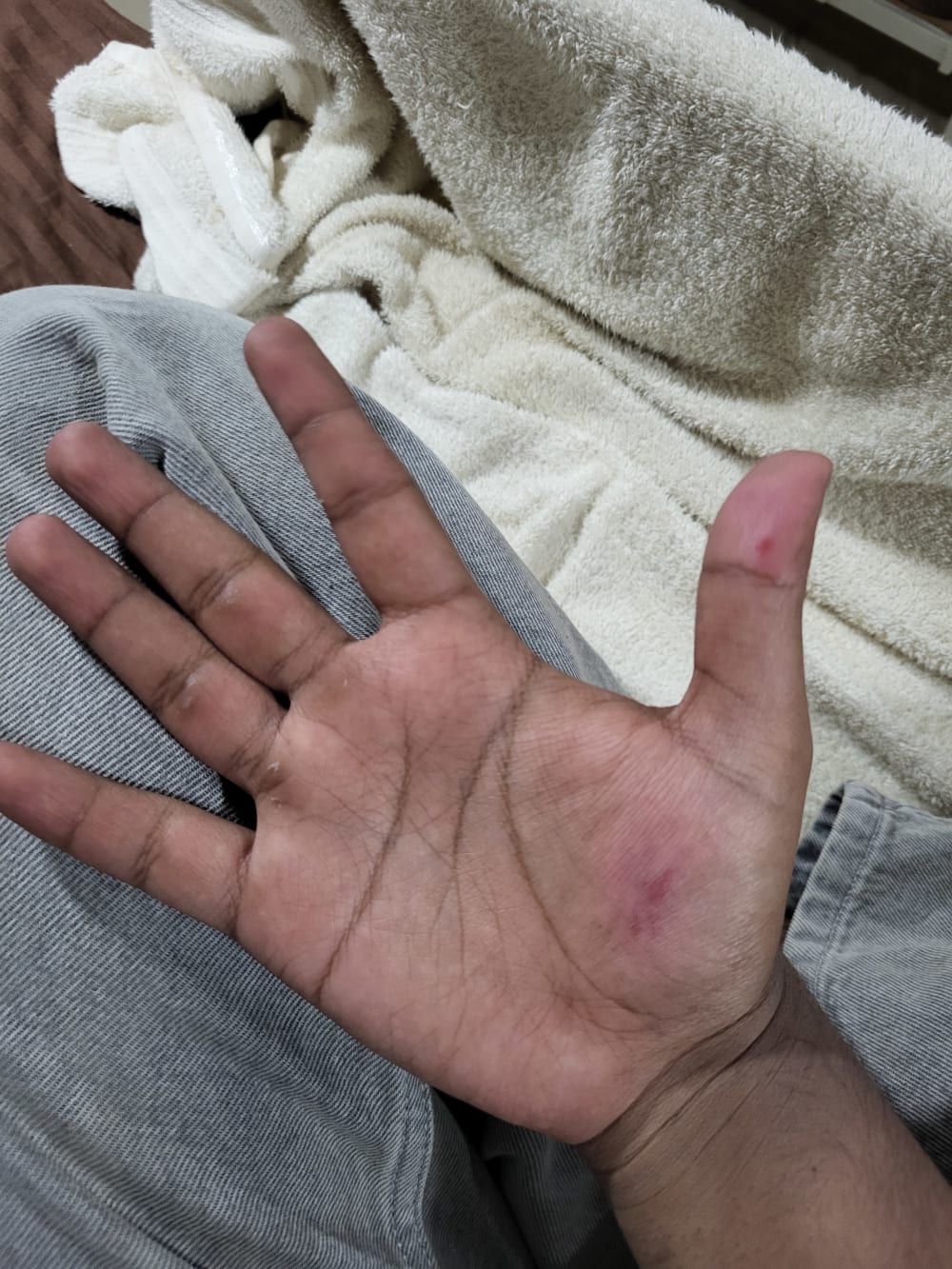
Of course, the ocean doesn't let you leave without paying the price. My body was covered in battle scars, like a deep purple bruise on my shoulder from carrying the heavy board, and raw sores and blisters on my palms and thumbs from hours of gripping the board and paddling. They hurt, but they felt like honest receipts of effort.
Sleeper Bus Reflection
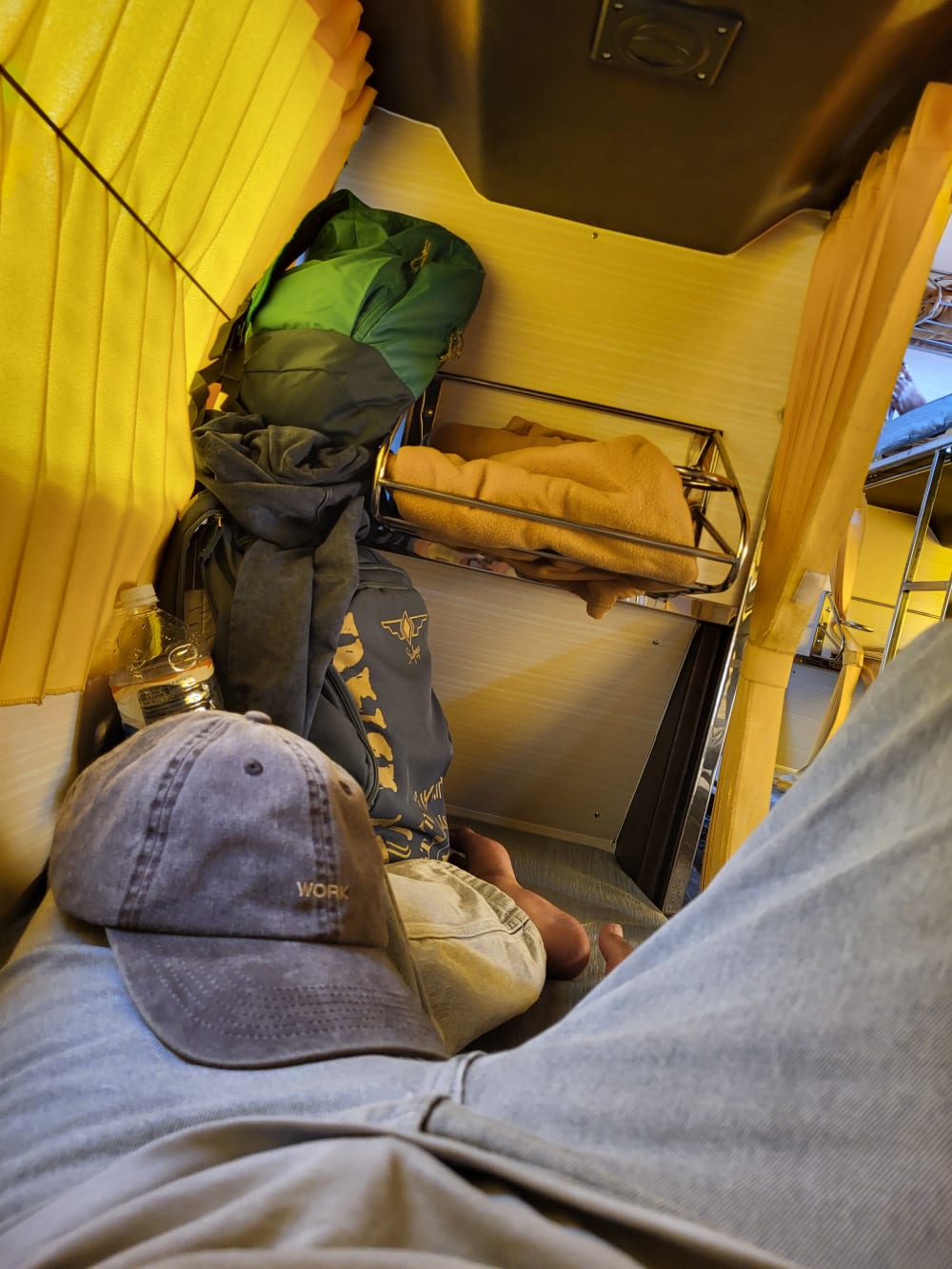
That night, I boarded the sleeper bus back. Crawling into my small berth enclosed by yellow curtains, with my grey cap resting on my lap, I felt completely drained but deeply satisfied. As the bus rocked along the highway, I fell asleep knowing I was going back with a sore body, a new respect for the sea, and the memory of catching my own waves.